

Table of Contents
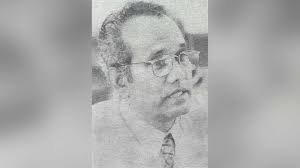
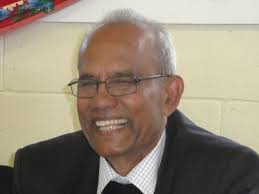
Pratap Chand — Teacher, Unionist, Politician
From a humble start in the cane belt to the corridors of Fiji’s Parliament, Pratap Chand built his career on service, education, and integrity. A teacher, trade unionist, and statesman, he became a trusted voice for Indo-Fijians and for all who believed that fairness and knowledge could guide a fractured nation.
Early Life & Teaching Career
Born in the cane-growing districts of Fiji, Pratap Chand experienced the modest beginnings typical of Indo-Fijian families in the mid-20th century. Education became his path upward. After completing secondary school, he entered the teaching profession — the most accessible career for bright Indo-Fijians whose families valued literacy above all else.
Chand quickly gained a reputation as a diligent teacher and empathetic mentor. He saw teaching not only as a job but as a mission to lift children from poverty and to give dignity to families who laboured in the fields. His classrooms were known for discipline and encouragement in equal measure.
Union Leadership
It was through the Fiji Teachers’ Union (FTU) that Chand stepped into national prominence. The FTU, historically dominated by Indo-Fijian teachers, was the strongest voice for equality in pay, conditions, and policy. Chand rose through its ranks, eventually serving as General Secretary.
Under his leadership, the FTU campaigned for equal pay regardless of race, fairer distribution of resources to rural schools, and improved training for teachers. Chand’s style was persuasive rather
than confrontational: he believed dialogue could achieve reform. This earned him respect not only
among Indo-Fijian teachers but also across ethnic divides.
“Education is not a privilege; it is a right. And a teacher is its first guardian.” — Pratap Chand
Entry into Politics
Chand entered politics under the banner of the Fiji Labour Party (FLP), which drew much of its strength from cane farmers, workers, and teachers. In the 1990s and early 2000s, he was elected
to Parliament and served as Minister for Education in the People’s Coalition government.
His tenure was marked by efforts to modernise curricula, improve school infrastructure, and promote multiracial education. Chand championed vocational subjects, computer literacy, and teacher training programmes, recognising that Fiji needed skills beyond cane and commerce to survive in a globalising world.
Guided Fiji Teachers’ Union with calm authority; fought for pay parity and rural school equity.
Expanded teacher training, pushed for computer literacy, supported multiracial curricula.
Seen as one of the most ethical and humble Indo-Fijian leaders of his generation.
Political Challenges
Chand’s time in office was not without turbulence. Coups and political instability repeatedly disrupted Fiji’s democratic institutions. As an FLP minister, he was caught in the crosscurrents of ethnic tensions . Yet even opponents admitted that Chand was free of the corruption and divisiveness that tarnished many others.
His soft-spoken style often contrasted with the fiery rhetoric of some colleagues. He preferred patient negotiation, believing that education policy should not be hostage to ethnic politics. For this, he earned admiration across communities — a rare achievement in Fiji’s polarised climate.
Case Study: Rural Schools Initiative
As Education Minister, Chand prioritised rural schools in Ba, Ra, and Labasa where facilities lagged behind. His ministry pushed for better teacher housing, electricity for classrooms, and subsidies for transport so children could reach schools. Though budgets were tight, his policies signalled that no child should be left
behind because of geography or ethnicity.
Legacy as Educator
For Chand, politics was an extension of teaching. He remained a “Master” even in Parliament — calm, principled, attentive. Colleagues recall that he often carried textbooks and policy papers together, seeing little difference between the two. His legacy is one of consistency: an Indo-Fijian who rose from village classrooms to cabinet without losing humility.
Born in cane belt Fiji; educated in community schools.
Became teacher; rose through Fiji Teachers’ Union ranks.
Entered Parliament with FLP; became Minister for Education.
Continued advocacy for teachers; respected elder statesman in politics.
“Pratap Chand showed that politics could be clean, unions constructive, and education transformative.”