
Table of Contents
Education — The Indo-Fijian Legacy
If cane was livelihood, education was liberation. From community schools funded by saman bazaars to the Fiji Teachers’ Union’s national voice, Indo-Fijians put classrooms at the centre of community life. Explore how teachers, unions, arts, universities and alumni networks shaped Fiji’s past and future.
How Indo-Fijian families built the first classrooms with volunteer teachers and saman bazaars — turning song and drama into desks, roofs and scholarships.
The Fiji Teachers’ Union transformed chalk into change — winning pay equity, shaping curricula and sending classroom leaders into Parliament.
Ramayana dramas, bhajans and qawwalis raised school funds and kept language alive — the arts as social infrastructure for Indo-Fijian education.
USP, FNU and overseas scholarships turned cane-belt ambition into professionals in law, medicine, finance and policy — a launchpad for national leadership.
Teacher shortages, underfunding, language decline and the digital divide — and how diaspora alumni networks now play the role saman once did.
Teacher, unionist, minister: a clean, steady hand who made education policy the heart of public service.
From Chalkboards to Campuses
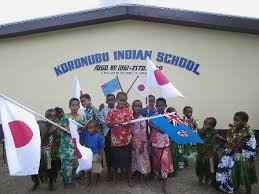
Indo-Fijian education is a story of self-help and solidarity: parents building rooms from timber, teachers organising through the FTU, artists funding schools, and graduates returning as doctors, lawyers and policymakers. The same spirit now powers alumni associations abroad that fund labs, libraries and laptops.
Early Indo-Fijian schools were financed by saman — bazaars of drama, music and food.
The Fiji Teachers’ Union championed pay equity, rural resources and multiracial education.
USP/FNU plus overseas scholarships produced Fiji’s professional class.
Teacher migration & digital divide — with diaspora stepping up as the new school committee.
“We cut cane so our children would carry books.”