

Table of Contents
Higher Education & Leadership — From Lecture Halls to National Influence
Indo-Fijians saw higher education as the surest way out of cane fields and corner shops. By investing in universities at home and abroad, they created a professional class that would go on to lead Fiji in law, medicine, finance, and politics. From the lecture halls of USP and FNU to scholarships in India, Australia, and New Zealand, higher education became the launchpad for Indo-Fijian leadership.
The Leap Beyond Secondary
By the 1950s, Indo-Fijians had built a robust network of primary and secondary schools. The next challenge was higher education.

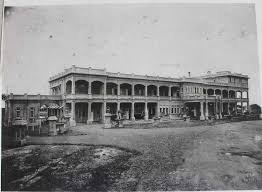
For ambitious families, university meant opportunity — a path into professions closed off under colonial structures. At first, higher education required travel abroad. Scholarships funded by community groups sent students to India for medicine and law, or to New Zealand and Australia for teaching and accounting.
These students returned with degrees and prestige, raising expectations for the next generation. A doctor or lawyer in the village was living proof that books could break barriers. The ripple effect turned ambition into a cultural norm.
“A degree was more than paper — it was proof that a cane-cutter’s child could lead a nation.”
The University of the South Pacific
The establishment of the University of the South Pacific (USP) in 1968 revolutionised Indo-Fijian access to higher education. Based in Suva but serving the entire Pacific, USP became a crucible of Indo-Fijian talent. Students studied economics, law, education, and science while living in a cosmopolitan environment that encouraged debate and leadership.
USP was more than an academic institution; it was a political nursery. Many Indo-Fijian leaders cut their teeth in student unions, debating constitutional reform, land leases, and multiracialism. Friendships and networks forged in campus corridors carried into ministries and boardrooms.
Medicine, law, and arts scholarships tied Indo-Fijians to ancestral homelands.
Teacher training, commerce, and engineering — routes into Fiji’s professions.
Anchor institution; produced lawyers, ministers, teachers, and business leaders.
Technical and vocational degrees, nursing, engineering, and applied sciences.
Law, Medicine & Economics
Indo-Fijians flocked to law because it combined advocacy with opportunity. Lawyers like A.D. Patel, Jai Ram Reddy, and Mahendra Chaudhry built careers that straddled courtroom and Parliament. Medicine offered another path: Indo-Fijian doctors and pharmacists staffed hospitals and private clinics, often serving rural communities neglected by colonial
systems.
Economics and commerce became the lingua franca of Indo-Fijian ambition in the 1970s. Accountants, bankers, and auditors emerged from USP and overseas universities, eventually populating Suva’s financial district. Their training stabilised Fiji’s fiscal institutions and linked the economy to regional and global systems.
Case Study: Overseas Scholarship Student
In the 1960s, a cane farmer’s daughter from Tavua won a scholarship to study medicine in India. Her tuition was partly funded by a temple committee and partly by *saman* bazaars. She returned as a doctor, becoming the first woman from her village to wear a white coat. Her example inspired dozens more students to pursue higher education, proving the power of community investment.
Teachers, Unions & Policy Influence
Teachers who gained degrees often returned not only to classrooms but also to leadership in the Fiji Teachers’ Union (FTU). Higher education gave them leverage in national debates on curricula, language policy, and multiracialism. Many FTU leaders later became cabinet ministers, carrying the ethos of education into governance.
Higher education thus linked directly to nation building. The Indo-Fijian belief that “knowledge is power” became literal policy as graduates rewrote syllabi, drafted budgets, and negotiated international agreements.
Women in Higher Education
Indo-Fijian women overcame cultural barriers to enter higher education in growing numbers. Nursing and teaching were the first gateways, followed by law, medicine, and commerce. Female graduates balanced careers with community roles, often mentoring younger women.
Their success expanded Indo-Fijian definitions of respectability and achievement. A daughter’s degree became as celebrated as a son’s, and often more so, because it represented both emancipation and service.
First overseas scholarships; small Indo-Fijian cohorts study in India, NZ, and Australia.
USP founded in Suva; Indo-Fijians gain unprecedented access to higher education.
First generation of Indo-Fijian professionals dominate law, teaching, and medicine.
Mass migration of educated Indo-Fijians; brain drain but strong diaspora networks.
Indo-Fijians excel in global academia, ICT, finance, and public policy.
Brain Drain and Diaspora Networks
Coups in 1987 and 2000 triggered waves of educated Indo-Fijians leaving Fiji. Teachers, doctors, and accountants migrated to Australia, New Zealand, Canada, and the U.S. While this weakened Fiji’s professional base, it created strong diaspora networks that continued to send remittances and expertise back home.
Alumni associations abroad fund scholarships, sponsor schools, and host cultural festivals. The diaspora turned brain drain into brain circulation, linking Fiji to global flows of knowledge and capital.
“Every Indo-Fijian graduate carries two burdens: to honour family sacrifice, and to lift the nation.”
Legacy & Future
Indo-Fijian higher education produced more than degrees. It produced leaders — in classrooms, courts, clinics, companies, and cabinets. Their influence is written in Fiji’s laws, budgets, hospitals, and businesses. Their diaspora footprint extends Indo-Fijian identity across the
globe.
The challenge now is sustainability. Fiji must retain talent, invest in research, and keep higher education accessible to rural youth. Indo-Fijians, true to tradition, continue to see education as the best inheritance they can give their children. The legacy of sacrifice and ambition lives on.