
Table of Contents
National Federation Party (NFP)
The long haul in Parliament. Founded in 1968 through the merger of the Federation Party and the National Democratic Party, the NFP became Fiji’s oldest surviving party—home to A.D. Patel, S.M. Koya, Jai Ram Reddy and today’s leader Biman Prasad.
Did You Know?
- In March 1977, the NFP technically won Fiji’s general election, but leadership divisions stopped it from forming government—one of the shortest-lived victories in Commonwealth history.
- Jai Ram Reddy remains the only Indo-Fijian leader to address Fiji’s Great Council of Chiefs, seeking reconciliation in 1997.
- The NFP’s alliance with Labour has alternated between cooperation and rivalry, shaping Indo-Fijian politics for half a century.
Key Facts
Founded
1968, via merger of Federation Party & National Democratic Party.
Ideology
Liberal democracy, rule of law, farmers’ rights, multiracialism, education.
Key leaders
A.D. Patel, S.M. Koya, Jai Ram Reddy, Harish Sharma, Biman Prasad.
Notable role
Negotiated independence constitution (1970), opposition through coups, key parliamentary reforms.
Origins and A.D. Patel’s Vision
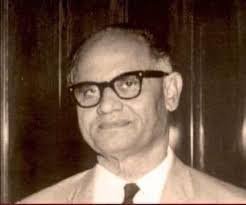
The NFP’s roots trace back to the Federation Party formed in 1963 under A.D. Patel, an Indo-Fijian lawyer who had already made his mark as a firebrand barrister and political visionary. Patel’s central aim was common roll elections—a system where all voters, irrespective of race, voted on the same roll. In colonial Fiji’s racially segmented system, this was radical. He argued that “a democratic nation cannot be built on racial compartmentalisation.” When the Federation Party merged with the National Democratic Party in 1968, it created the National Federation Party, uniting Indo-Fijian professionals, cane farmers, and clerical workers under one umbrella.
Milestones
Timeline
1963
Federation Party founded by A.D. Patel, focusing on common roll.
1968
Merger with National Democratic Party to form the NFP.
1970
Independence talks; NFP leaders Patel (until his death in 1969) and S.M. Koya play major roles in constitutional negotiations.
1977
NFP wins majority in March election but internal splits prevent government formation; a defining crisis.
1987
Military coups derail Fiji’s democracy; NFP and Labour Party struggle to rebuild politics.
1997
Jai Ram Reddy leads NFP into landmark bipartisan constitutional reform with Sitiveni Rabuka, embedding Bill of Rights protections.
2014–18
NFP returns to Parliament under Biman Prasad, securing a foothold despite FijiFirst dominance:contentReference[oaicite:2]{index=2}:contentReference[oaicite:3]{index=3}.
Why It Mattered
For decades, the NFP stood as the parliamentary conscience of Fiji. Its MPs kept alive debates about equality before the law, free speech, and education. The party built the infrastructure of Indo-Fijian political life: alliances with cane farmers, links with teachers’ unions, and intellectual heft in Parliament. Even in opposition, the NFP forced issues onto the agenda—land lease security, university access, rural health, and constitutional rights.
Crises and Splits
The party’s long history was also punctuated by internal division. The 1977 schism saw two rival factions—one led by S.M. Koya, another by Jai Ram Reddy—leaving the Governor-General unable to commission a government despite NFP’s majority win. This episode damaged its credibility. In the 1980s, the rise of the Fiji Labour Party split Indo-Fijian loyalties, and many cane farmers shifted allegiance. Yet through setbacks, the NFP persisted, often reduced to a handful of MPs but never disappearing.
Legacy in the 1997 Constitution
Under Jai Ram Reddy, the NFP entered a historic partnership with Prime Minister Rabuka’s SVT to craft the 1997 Constitution. Reddy’s speech in Parliament calling for forgiveness and reconciliation remains one of Fiji’s most eloquent moments. The Constitution enshrined a Bill of Rights, multiparty Cabinet, and electoral fairness. Though later overturned by the 2000 coup, this legacy still marks the NFP as Fiji’s architect of liberal democracy.
Recent Elections
After years outside Parliament, the NFP re-entered in 2014, winning three seats. Biman Prasad, an economist, emerged as leader. Despite FijiFirst’s dominance, the NFP became a consistent critic of authoritarian tendencies and pressed for education reforms, sugar industry revival, and anti-poverty policies. In the 2018 general election, NFP again secured a foothold with over 30,000 votes, confirming its endurance as a small but steady voice:contentReference[oaicite:4]{index=4}:contentReference[oaicite:5]{index=5}.
Gallery
References
- Wikipedia — National Federation Party
- Brij V. Lal, A Vision for Change: A.D. Patel and the Politics of Fiji (ANU Press, 1997)
- ANU Press: Federation Party history
- Fiji Elections Office, 2014 and 2018 General Election official results:contentReference[oaicite:6]{index=6}:contentReference[oaicite:7]{index=7}