
Table of Contents
Hindu Maha Sabha (1926–1932)
Unity attempted — and tested. Established in 1926 to unite Hindus across sects, it soon fractured along reformist and orthodox lines, leaving two enduring institutions in its wake.
Origins
The Hindu Maha Sabha in Fiji was modelled on the All-India Hindu Maha Sabha, then gaining momentum as a cultural-civic organisation in India. Its Fijian branch emerged at a time when Indo-Fijian communities were seeking collective representation after the end of indenture in 1920.
In 1926, a group of leaders — mainly from the reformist Arya Samaj movement — launched the Sabha to create a unified Hindu platform that could represent religious, cultural and educational concerns before colonial authorities. Traditional Sanatan Dharm priests and lay leaders were invited but often felt dominated by the better-organised Arya Samajists, sowing the seeds of tension.
Milestones
- 1926 Formation: Pledged Hindu unity across caste and sectarian divides.
- Education: Promoted Hindi literacy, religious teaching and new schools under Sabha banners.
- Community Voice: Positioned itself as a peak Hindu body — a counterpart to the Fiji Muslim League (est. 1926).
- Conflict: Disputes with the Muslim League (e.g., burial grounds; religious instruction) and within Hinduism (reformists vs. orthodox).
- Temple/Court disputes: Property control fights led to litigation, eroding credibility.
- 1930–1932 Decline: Reconciliation failed; by 1932, the Sabha had collapsed and separate umbrellas — the Arya Pratinidhi Sabha and Sanatan Dharm Pratinidhi Sabha — solidified as parallel institutions.
Leadership and Factions
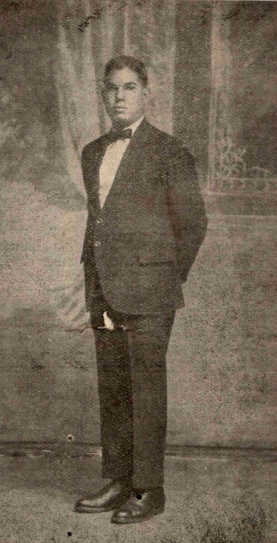
Early leadership included prominent Arya Samajists such as Pandit Vishnu Deo (later a long-serving Indo-Fijian legislator) alongside orthodox figures. The coalition was uneasy: Arya leaders pressed for social reform, while Sanatan leaders defended traditional practice. The rift ultimately prevented the united front the Sabha intended.
Legacy
Though short-lived, the Sabha was the first attempt at a single Hindu umbrella in Fiji. It pushed Hindu concerns onto the colonial agenda, normalised community advocacy, and set precedents in education and organisation. Its failure underscored the depth of doctrinal divides — yet foreshadowed later cooperation between Arya and Sanatan institutions in schooling, festivals and public life.
Gallery

Sources
- Ahmed Ali, Fiji: From Colony to Independence, 1874–1970.
- Brij V. Lal, Broken Waves: A History of the Fiji Islands in the Twentieth Century.
- John D. Kelly, A Politics of Virtue: Hinduism, Sexuality, and Countercolonial Discourse in Fiji.
- Vishnu Deo portrait file notes and licensing on Wikimedia Commons; original: The Modern Review, Oct 1929. :contentReference[oaicite:2]{index=2}
- Sri Siva Subramaniya Temple photo and licensing on Wikimedia Commons. :contentReference[oaicite:3]{index=3}