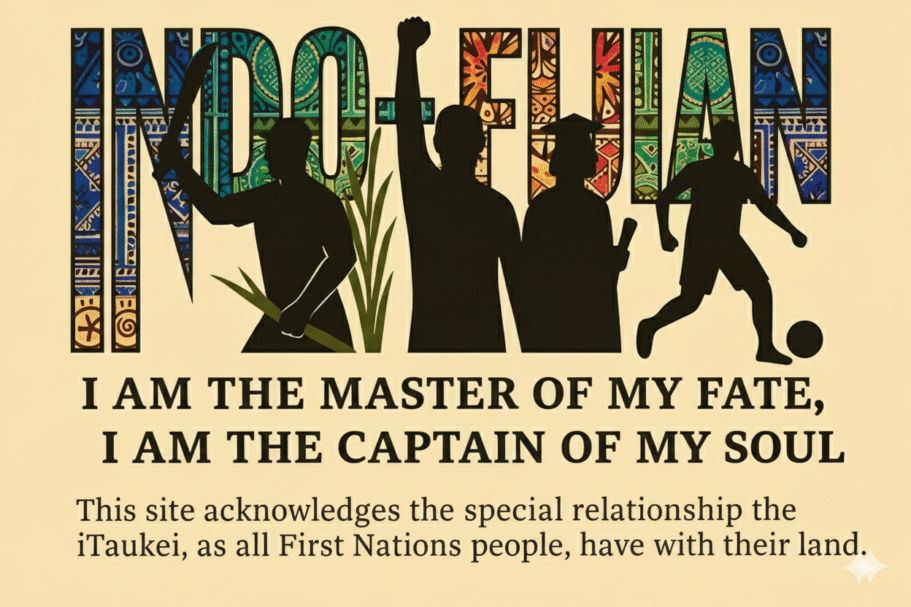

This is the story of how tens of thousands of Indians crossed the kala pani to Fiji, signed to an “agreement” they called girmit, and built families, faiths and futures on cane fields. It is told through voices of girmityas, officials and historians – clearly, simply, and with care.
At a glance — timeline
- 1874: Fiji becomes a British Crown colony.
- 14 May 1879: First ship Leonidas lands 498 Indian workers at Levuka/Suva.
- 1879–1916: Regular shiploads arrive from Calcutta and Madras presidencies.
- 1916–1917: Growing Indian and international pressure; recruitment is stopped.
- 1920: Last Fiji indenture contracts expire; girmit formally ends.
Table of Contents
Why indenture came to Fiji
When Britain annexed Fiji in 1874, sugar was the new gold. Planters wanted a steady workforce, but colonial policy protected iTaukei villages from mass plantation labour. With slavery already abolished, officials adopted a “solution” used across the Empire: import contracted workers from India on low wages and strict terms.
“A system born after slavery’s end, yet shadowed by it.”
Summary of comparisons by historians Hugh Tinker and K.L. Gillion
Summary of comparisons by historians Hugh Tinker and K.L. Gillion
Recruitment: poverty, promises and paper
Recruiters moved through villages in today’s Uttar Pradesh, Bihar and the south. Droughts, debt and shrinking rural incomes pushed many to listen. Some signed to escape hardship; others were enticed by selective truths about pay and “island life”. The contract – the girmit – set five years of labour, housing in lines, rations and a small wage. Few grasped how hard the work would be.
What the “agreement” actually meant
- Term: Typically 5 years of indenture, then 5 years as “free” settlers or a paid return passage.
- Control: Overseers and immigration laws enforced attendance, pace and obedience.
- Penalties: Fines, jail or contract extension for “absenteeism” or “insubordination”.
Sources: K.L. Gillion; Brij V. Lal; Fiji colonial regulations.
The voyage: crossing the kala pani
Ships left Calcutta or Madras crowded with men, women and children. The journey took two to three months through heat and storms. Space was tight; sickness spread quickly. Some never reached Fiji. Those who did remembered the smell of the holds, the roll of the sea, and the shock of first seeing Fiji’s mountains rise out of the Pacific.
“We slept shoulder to shoulder; the ocean did not end.”
Paraphrased from oral histories collected in Indo-Fijian communities
Paraphrased from oral histories collected in Indo-Fijian communities
Plantation life: hard work, small freedoms
Cane fields demanded dawn-to-dusk labour – cutting, loading, weeding, digging drains. Wages were low. Overseers timed and tallied outputs. Punishments ranged from fines to physical assault. Women worked as well, often while carrying children. Yet people still carved out space for dignity and community.
- Homes & rations: Long “lines” of barracks, basic supplies, shared cooking fires.
- Faith & festivals: Small shrines and prayer spaces; Ramayana readings, Eid, Diwali and Holi marked time and hope.
- New kinship: Caste boundaries blurred; Hindu and Muslim families interwove through friendship and marriage.
“To many, girmit felt like narak — a kind of hell — but still we made life.”
After Brij V. Lal’s social histories of girmitiya experience
After Brij V. Lal’s social histories of girmitiya experience
Resistance: quiet pushback and rare strikes
Most defiance was everyday and quiet — slowing work, sharing information, petitioning immigration officers. A few moments broke into the open, like the Labasa strike of 1907, when workers protested contract deceit and supplies. Such flashes showed solidarity, but policing and law kept organised revolt rare.
Ending girmit
After 1920: making a home
- Many stayed, leased land, and became small cane farmers or traders.
- Temples, mosques, schools and social clubs spread across the cane belts.
- Community leaders emerged, unions formed, and Indo-Fijians entered national politics.
7) Fiji and the wider indenture world
Fiji was part of a larger system that sent about 1.3 million Indian workers to sugar colonies after slavery ended. Mauritius began in the 1830s; Trinidad, Guyana and Suriname followed; the Pacific islands, including Fiji, joined later. Everywhere the pattern rhymed: poverty at home, hard voyages, cane discipline, and, in time, durable Indian-diaspora communities.
Compare at a glance
- Mauritius (1834–1910s): First large-scale Indian indenture destination; rapid plantation expansion.
- Trinidad & Guyana: Massive Caribbean programmes; strong union and cultural movements.
- Fiji (1879–1920): Later start; smaller numbers, but deep and lasting community roots.
Key readings & sources
The summary above draws on widely cited research and primary testimonies. For deeper study:
- Brij V. Lal — Chalo Jahaji; Girmitiyas; essays on Fiji indenture and settlement.
- K.L. Gillion — Classic administrative and social history of Indian indenture in Fiji.
- Hugh Tinker — Comparative study of indenture as “a new system of slavery”.
- Adrian C. Mayer — Early społecz & community studies on Indo-Fijians.
- C.F. Andrews & W.W. Pearson — Investigative reports that helped end indenture.
- Fiji Museum & National Archives — Ship registers, photos, immigration and plantation records.