
Table of Contents
1977 Constitutional Crisis: Fiji’s First Broken Election
In March 1977, Fiji faced its first great political test after independence. The opposition National Federation Party (NFP), backed overwhelmingly by Indo-Fijian voters, won a narrow majority in parliament. For the first time, an Indo-Fijian-led government seemed inevitable. But within days, the dream collapsed. Internal divisions, hesitation, and intervention by the Governor-General left the ruling Alliance Party of Ratu Sir Kamisese Mara in power. For Indo-Fijians, the episode was both a glimpse of possibility and a bitter reminder of the barriers to equality in Fiji’s new democracy.
The 1970 Settlement and Communal Politics
Fiji’s independence constitution of 1970 had entrenched communal seats: separate rolls for indigenous Fijians, Indo-Fijians, and “General Electors” (Europeans, Chinese, and other minorities). The Alliance Party, led by Ratu Mara, had dominated politics in the first years of independence, presenting itself as a multi-ethnic coalition but leaning heavily on chiefly authority and indigenous support.
The NFP, led by Siddiq Koya, remained the main Indo-Fijian party. It had accepted independence in 1970 as a compromise but continued to campaign for greater equality. By 1977, with economic concerns rising and Alliance losing ground, the NFP sensed an opportunity.
The March 1977 Election
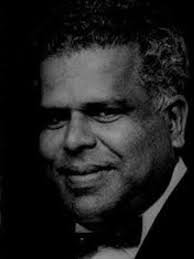
The March general election produced a shock result. The NFP secured 26 of the 52 seats in parliament, one more than the Alliance Party. It was a razor-thin majority, but enough to form government. Indo-Fijians across Fiji celebrated—after decades of struggle, it seemed that one of their own, Siddiq Koya, would become Prime Minister.
Yet almost immediately, cracks appeared. The NFP was deeply divided between rival factions, led by Koya, K.C. Ramrakha, and Irene Jai Narayan. Disputes over leadership, strategy, and personalities paralysed the party at the very moment it needed unity. Days passed with no decisive move to form government.
The Governor-General Intervenes
With NFP paralysed, Governor-General Ratu Sir George Cakobau acted. Arguing that the NFP could not provide stable government, he reappointed Ratu Mara and the Alliance Party to office. The decision was controversial: critics saw it as a betrayal of parliamentary democracy and a denial of Indo-Fijian political rights. Supporters claimed it was necessary to prevent instability.
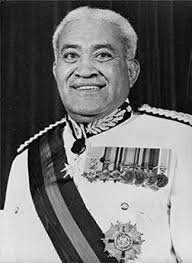
The NFP was outraged but unable to act. Its divisions had fatally undermined its claim to govern. For Indo-Fijians, the moment was heartbreaking: victory at the polls had not translated into power.
The Aftermath: Two Elections in One Year
The crisis shook Fiji’s politics. Later in 1977, a second general election was called. This time, the Alliance Party regained a comfortable majority, and Mara returned to power more firmly than before. The NFP, still fractured, never recovered its momentum. The brief window of Indo-Fijian leadership closed, leaving behind only frustration.
For Indo-Fijians, the lesson was stark: even when they won, they could still lose. Many concluded that the system was stacked against them—that communalism, chiefly power, and colonial legacies made true equality impossible under the 1970 Constitution.
The Indo-Fijian Perspective
The 1977 crisis remains etched in Indo-Fijian memory as the moment they were closest to power, only to have it slip away. Some blame the NFP’s leaders for failing to seize the moment. Others blame the Governor-General for bias. All agree it revealed the fragility of Indo-Fijian political influence, no matter how strong their numbers at the ballot box.
It also deepened the exodus of Indo-Fijians into migration. Many professionals, disillusioned, began leaving for Australia, New Zealand, Canada, and the United States, fearing their children would never be treated equally in Fiji.
Legacy of 1977
The 1977 Constitutional Crisis exposed the weakness of Fiji’s independence settlement. Communalism, intended as balance, proved unstable. Indo-Fijians discovered that numerical strength did not guarantee political power. The crisis foreshadowed the far more dramatic breakdowns to come: the coups of 1987, 2000, and 2006.
Yet 1977 also left a lesson: without unity, even victory is hollow. For Indo-Fijians, the crisis reinforced the need for strong, disciplined leadership to carry their demands for equality. It was a painful reminder that in Fiji, democracy was still fragile—and equality, elusive.