
Table of Contents
1969–1970: The London Talks and Independence Settlement
In the final years before independence, Fiji’s leaders and Britain faced a fundamental question: could a divided colony become a united state? The answer, forged in the London constitutional talks of 1969–70, was compromise. Independence was granted on 10 October 1970, but Indo-Fijian hopes of a common roll were sacrificed. It was a proud birth, but one shadowed by unfinished business.
The Road to London
By the late 1960s, the momentum toward decolonisation was unstoppable. The United Nations, the Commonwealth, and Pacific neighbours pressed Britain to complete the transition. Fiji had already introduced universal adult franchise in 1963 and cabinet-style government in 1967. The next step was a full constitution.
For Indo-Fijians, the demand was simple: “One Man, One Vote, One Value”. For indigenous chiefs and the Alliance Party, the demand was security — guarantees that independence would not mean demographic swamping. Britain’s role was to midwife a deal neither side loved but both could live with.
The London Conference, 1969–70
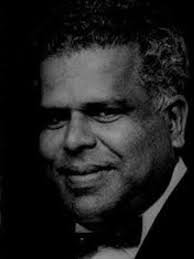
Delegations met in London under the eye of Britain’s colonial office. The Alliance Party, led by Ratu Sir Kamisese Mara, pushed for communal representation. The National Federation Party (NFP), led by Siddiq Koya after A.D. Patel’s death in 1969, argued for common roll but faced pressure from Britain and internal splits.
The outcome was the 1970 Constitution: a bicameral parliament with communal and cross-voting seats, a Senate with seats for the Great Council of Chiefs, and a Prime Minister chosen from the House. It was hailed as balanced — but Indo-Fijians saw it as a retreat from principle.
The Indo-Fijian Reaction
Indo-Fijians were divided. Many felt betrayed: Patel’s dream of common roll had been abandoned at the final hour. Koya argued pragmatism — better to secure independence now than risk chaos later. Some Indo-Fijians agreed, seeing independence as a higher priority. Others believed the settlement locked them into second-class status. The rift weakened the NFP and haunted Indo-Fijian politics for decades.
10 October 1970: Independence Day
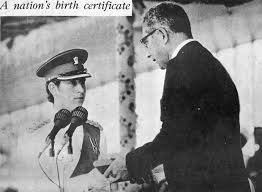
On 10 October 1970, Fiji became independent. The date echoed the 1874 Deed of Cession, symbolically “reversing” the act of surrender to Britain. Prince Charles, representing Queen Elizabeth II, lowered the Union Jack and raised Fiji’s new flag. Ratu Mara became the first Prime Minister. Indo-Fijians celebrated, but with muted pride — independence had come, but not on their terms.
Significance
The 1969–70 talks left a double legacy. They gave Fiji sovereignty, a parliament, and a constitutional framework. But they also entrenched communalism, ensuring that ethnicity would remain the fault line of politics. For Indo-Fijians, it was a bittersweet moment: freedom had arrived, but equality was deferred.
Legacy
The compromise of 1970 shaped Fiji’s next half-century. It stabilised the early years of independence but sowed the seeds of the 1977 crisis, the 1987 coups, and the long battles for constitutional reform. For Indo-Fijians, it became a reminder that every advance came at a price — and that the struggle for full equality was far from over.