

Table of Contents
1959–1960: The General Strike, the Denning Award, and the Making of Indo-Fijian Union Power
If the 1920s birthed Indo-Fijian protest, the 1959–60 strikes forged an Indo-Fijian union tradition capable of changing national policy. The Suva disorders of December 1959 widened into a crisis of wages and governance. In 1960, London sent one of the Commonwealth’s most famous jurists—Lord Denning—to arbitrate Fiji’s sugar contracts. The Denning Award transformed how cane proceeds were shared, elevating the economic security and political confidence of Indo-Fijian farmers. From that confidence came the leadership bench—A.D. Patel, Siddiq Koya, Ayodhya Prasad—that would shape independence debates.
1959: Wages, Prices, and the Suva Shock
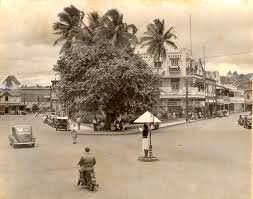
Post-war Fiji was changing fast: rising prices, urban drift, and a tight colonial wage regime. In December 1959, a wage dispute escalated into the Suva disturbances—a grim wake-up call for the colonial government. Though multi-ethnic in participation, the unrest amplified Indo-Fijian labour activism and drew global attention to Fiji’s industrial relations. Colonial authorities realised the “old way” of managing workers and cane farmers was failing.
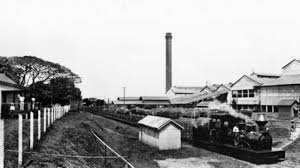
At the same time, in the cane belts of Viti Levu and Vanua Levu, Indo-Fijian farmers were locked in yearly battles with the Colonial Sugar Refining Company (CSR) over cane prices, transport, and mill deductions. Rival unions—the Kisan Sangh (Ayodhya Prasad) and the Maha Sangh (later aligned with A.D. Patel and Siddiq Koya)—competed for farmer allegiance but agreed on one truth: the CSR monopoly extracted too much value from cane growers.
1960: Lord Denning and the New Cane Formula
To break the deadlock, Britain appointed Lord Alfred Denning as arbitrator. Denning’s inquiry took evidence from farmers, CSR, and government, cut through the weeds of deductions and cartage, and proposed a more equitable sharing formula for cane proceeds. The Denning Award became a watershed: it boosted farmer incomes, improved contract transparency, and constrained CSR’s unilateral power. It did not end disputes, but it shifted bargaining power decisively toward growers.
Among Indo-Fijians the impact was electric. A farmer who could keep his family on the land and send children to secondary school was a voter less fearful and more assertive. The unions gained legitimacy; their leaders gained national stature. When the 1965 and 1969 constitutional talks rolled around, the Indo-Fijian case for common roll stood on an economic base built in part by Denning’s recalibration.
The Union Bench: From Cane Fields to Parliament
Ayodhya Prasad (Kisan Sangh) mobilised smallholders with tenacity, insisting contracts reflect growers’ risks. A.D. Patel and Siddiq Koya, via the Maha Sangh, professionalised farmer representation and carried it into law and policy. In the urban sector, the Fiji Public Servants’ Association and transport, teachers’ and municipal unions broadened Indo-Fijian leverage. The sugar unions remained the heart: whoever carried the cane belts could credibly speak for Indo-Fijian livelihoods—and, increasingly, for a multi-ethnic working class.
Beyond Denning: Strikes, Unity, and Division
Denning did not end conflict. The 1943 strikes (earlier) had taught the movement the price of disunity; later disputes in the late 1960s and 1970s re-lit rivalries between Kisan and Maha Sangh. Yet the strategic arc bent toward a stronger farmer voice: regularised contracts, more predictable sharing, and the political expectation that governments—colonial or independent—must reckon with the cane belt. This expectation travelled straight into the post-1970 era, shaping cabinet agendas and election platforms.
What It Meant for Indo-Fijians
The 1959–60 turning point embedded three durable truths. First, economic security is political power: with fairer cane returns, farmers funded education and leadership pipelines. Second, collective bargaining works: arbitration and union discipline beat sporadic revolt. Third, national recognition follows rural victories: cane growers’ gains legitimised Indo-Fijian claims to equal citizenship, making the later demand for “One Person, One Vote” sound like common sense, not radicalism.
Legacy of 1959–60
From Suva’s 1959 shock to Denning’s 1960 award, Fiji’s labour relations entered a modern phase. For Indo-Fijians, it was the bridge from Girmit memory to middle-class aspiration: reliable farm incomes, better schools, university prospects, and professional careers. The union benches produced the negotiators of the 1960s, the parliamentarians of the 1970s, and the reformers of the 1990s. When Fiji later lurched into coups, the memory of Denning remained a benchmark: if reason and law once worked for cane farmers, they can work again for citizens.
At a glance: Other defining union & cane struggles
- 1920–21 Cane Strikes: First mass defiance after indenture—seedbed of union politics.
- 1930s Unionisation: Rise of Kisan Sangh (Ayodhya Prasad) and Maha Sangh (Patel/Koya).
- 1943 Cane Strike: A.D. Patel’s emergence; repression hardens Indo-Fijian resolve.
- Late-1960s Contract Disputes: Denning principles tested; farmer unity vs union rivalry.
- 1980s–90s Lease Politics (ALTA): Expiring leases, rural intimidation; unions pivot to rights and social protection.
- 2000 Coup Aftermath: Targeting of cane communities; union networks become relief chains.