

Table of Contents
Challenges & Future — Indo-Fijian Education in Transition
The Indo-Fijian journey in education began with Mela bazaars and community-built schools. It produced teachers, lawyers, doctors, and ministers. Yet today, that legacy faces challenges: migration, underfunding, language decline, and a globalised world demanding new skills. The future of Indo-Fijian education will depend on how these challenges are met — with resilience, innovation, and the same community spirit that built the first classrooms.
Migration & Teacher Shortages
Migration remains the biggest challenge. Since the 1987 and 2000 coups, thousands of Indo-Fijian teachers and professionals have left Fiji. Australia, New Zealand, Canada, and the U.S. continue to recruit teachers and nurses, offering higher pay and security. This has created chronic shortages in Fiji’s classrooms, especially in science and maths.
Indo-Fijian schools, once abundant in staff, now struggle to fill posts. Many rely on retired teachers or volunteers. The loss is not just in numbers but in experience — the teachers who leave often carry decades of expertise.
“The classroom is emptier not of children, but of mentors.”
Underfunding & Infrastructure
Many Indo-Fijian schools still operate with leaking roofs, outdated textbooks, and inadequate technology. Community fundraising remains a lifeline, but the burden on parents is heavy. While government grants help, allocation disputes sometimes leave Indo-Fijian schools feeling marginalised.
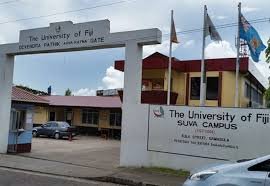
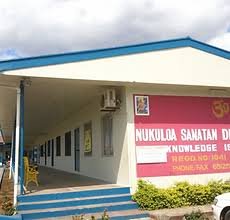
Urban schools fare better, but rural cane-belt institutions lag. Science labs, computer rooms, and libraries often exist only in name. The digital divide risks leaving Indo-Fijian rural students behind in a world where ICT is essential.
Language Decline
A key concern is the decline of Hindi and Urdu in schools. Once central to identity, these languages are now losing ground as English dominates curricula and global opportunities. Many Indo-Fijian children can no longer read Ramayan or Quranic texts fluently.
Cultural groups still run Hindi classes and mandali gatherings, but enthusiasm wanes among youth. Without deliberate revival, Indo-Fijian education risks losing the bilingualism that once gave it cultural depth.
Emigration drains classrooms of experienced staff.
Many schools lack proper labs, libraries, and digital resources.
Hindi and Urdu teaching weakens as English dominates.
Urban schools thrive while rural cane belt schools fall behind.
STEM vs. Cultural Balance
Indo-Fijian parents increasingly push children towards STEM subjects — science, technology, engineering, maths — as pathways to migration and employment. While pragmatic, this emphasis sometimes sidelines arts, literature, and cultural education. The danger is a loss of balance: technical skills without cultural grounding risk weakening Indo-Fijian identity.
The challenge for schools is to teach coding alongside Hindi, chemistry alongside bhajans, commerce alongside community service. Only such a balance can sustain both prosperity and heritage.
Case Study: Digital Divide in Labasa
In 2020, a Labasa school introduced online learning during the COVID-19 pandemic. Urban students managed well, but rural Indo-Fijian children struggled — few had laptops or reliable internet. Alumni abroad raised funds to buy tablets, proving once again that diaspora support fills critical gaps. Yet the case showed how fragile Fiji’s digital readiness remains.
Women & Future Leadership
Indo-Fijian women continue to excel as teachers, principals, and union leaders. They are also entering ICT, law, and science in larger numbers. Supporting women’s leadership in education remains crucial, not only for equity but for sustainability. Female teachers often remain in Fiji longer than male colleagues, stabilising classrooms and communities.
Coups trigger emigration of teachers; first wave of shortages begins.
Second wave of migration after coup; brain drain accelerates.
Digital divide becomes pressing; alumni remittances fund ICT upgrades.
Indo-Fijian education faces globalised pressures: migration, STEM, language loss.
Diaspora Support & Alumni Networks
Remittances now fund not only households but also schools. Alumni associations abroad sponsor scholarships, rebuild classrooms, and supply technology. What saman did in the 1920s, alumni groups do today in Sydney, Auckland, Vancouver, and San Francisco. This globalised Mela keeps Indo-Fijian education alive.
“The diaspora is our new school committee — global, generous, and vital.”
The Road Ahead
The future of Indo-Fijian education depends on balance: retaining teachers while embracing global mobility, sustaining Hindi and Urdu while mastering English, upgrading infrastructure while preserving community ownership. Technology will be central, but so will cultural resilience.
If the spirit of sacrifice that built schools through saman bazaars can be harnessed in new ways, Indo-Fijian education will not only survive but thrive. It will continue to produce leaders, professionals, and citizens who honour their heritage while navigating a global future.