

Table of Contents
Retail & Commerce — Shops, Markets, and Small Business
Long after the cane knives were sheathed each evening, another economy came alive under hurricane lamps:market stalls, tailor’s benches, bakery ovens, and corner shops where credit was trust written in chalk.
From these modest rooms, Indo-Fijians built a retail and trading network that stitched the sugar belt to the towns, and Fiji to the wider world. This is the story of shops as social infrastructure—how small business turned hard labour into family stability, and local streets into arteries of national growth.
Why Shops Mattered
In the cane belt, cash flowed seasonally. Families needed a buffer between harvests; communities needed places where essentials could be bought on credit, tools repaired, and news exchanged. The Indo-Fijian shopkeeper stepped into that gap. A grocery counter extended the farm’s pantry; a tailor’s tape measure stretched family dignity; a bakery turned flour into certainty at dawn. Small shops stabilised households, circulated money locally, and reduced the cost—and the friction—of rural life.
Retail also offered something cane could not: daily cashflow. A farmer who ran a roadside store converted seasonal risk into steady income. For women especially, shopkeeping and home-based enterprises created independent economic roles—managing books, suppliers, and customer relationships with the calm authority of practice.
Corner shops, tailors, and bakeries anchored Indo-Fijian town growth in Ba, Lautoka, Nadi, Labasa.
Retail converted seasonal farm income into year-round cashflow and local jobs.
Family stores doubled as credit hubs and community noticeboards.
The Shop as a Household Enterprise
Most Indo-Fijian shops began as family rooms cleared of furniture and stocked with the basics: kerosene, soap, rice, dhal, tinned fish, tea, school exercise books. Shelves were timber planks on bricks; a glass jar of barley sugar by the till was both treat and trust. Books were kept in ruled ledgers—columns for names, items, amounts, and last payments. Credit was personal. A good payer received a smile and an extra scoop; a slow payer got gentle reminders and sometimes a plate of sweets with the bill—persuasion, not humiliation.
The workday stretched from pre-dawn deliveries to late-night lamp-light. Suppliers came on rattling lorries; customers arrived with lists folded in the palm. Children weighed onions on brass scales and learned mental arithmetic by serving line after line. The shop was a school of enterprise: inventory, margins, and cash-up routines were learned before algebra.
“The corner shop was our bank, our newsroom, our pantry—open when the mill was shut.”
Markets and the Weekly Pulse
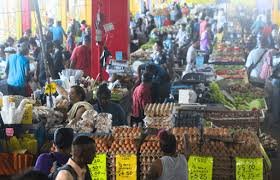
Municipal markets in Ba, Lautoka, Nadi and Labasa set the rhythm of the trading week. Farmers and vendors arrived at first light with produce piled high: bhindi, eggplant, chillies, cassava, dalo, bundles of greens, eggs and pawpaw. Indo-Fijian women were central here—price-makers and negotiators, builders of loyal customer bases through constancy and courtesy. A stall was a brand, its tablecloth a logo, its stacked vegetables a reputation for fairness and freshness.
Markets also connected the cane belt’s Hindu and Muslim communities with iTaukei growers and Indo-Fijian and Chinese traders. Bargaining was honest theatre; friendship prices cemented across seasons replaced contracts. A new vendor was mentored as often as competed with—because the market’s strength was its variety, and its order was the unwritten rule that everyone goes home able to return next week.
Case Study: Saturday in Ba
Dawn fog lifts off the river as the first bus curves in from the interior. Porters wheel barrows between tables; a chorus of greetings rises. At one stall, a vendor lines up okra in military neatness, each piece turned to its shiniest side. By mid-morning the aisles are fluent with shoppers. Families buy for the week, but the market sells time too: cooked snacks are a pause in a busy life; gossip is a market good exchanged free. At noon, prices soften. By two, sheets are folded, unsold greens bundled for neighbours. When the last lorry pulls out, the town feels newly stocked with life.
From Streetfront to High Street
As profits accumulated, family businesses moved from house-front counters to purpose-built shopfronts in town. A timber façade became concrete; the hand-painted sign gave way to enamel and then neon. Groceries diversified into hardware, electrical goods, and garments. Tailors turned to ready-to-wear; workshops added shoe repair, bicycle parts, then motor spares. A single shop grew into two, then a cluster, then a block that employed cousins and neighbours. Apprentices learned trades in the back rooms that would carry them into their own ventures.
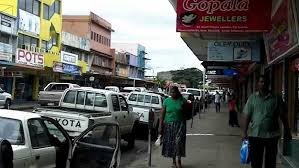
The shift changed towns themselves. Commercial streets expanded; arcades offered shade; bus stands relocated to feed shopfronts. Local Councils found in the Indo-Fijian business class a steady constituency: practical, detail-minded, and keen on drainage, streetlights and footpaths—the infrastructure of trade and the grammar of civic life.
Credit, Trust and Risk
Retail margins in small shops were thin; survival depended on turning stock quickly and managing credit with care. A ledger could be a lifeline or a deadweight. Indo-Fijian shopkeepers developed a culture of cautious risk: extending credit to regulars, limiting exposure to new customers, and diversifying product lines to spread shocks when a cyclone or mill breakdown emptied wallets. Insurance against theft and fire slowly became standard; safes and shutters graduated from homemade to manufactured; tills from cigar boxes to machines.
The best risk control remained relationships. A shopkeeper knew the birth dates of customer’s children, the week a lease renewal would strain cash, the day a pension hit accounts. Collections were timed with dignity in mind. “Come after the market,” a proprietor might say, aligning economics with courtesy.
Women in Commerce
Though men often fronted counters, women ran the engines of small business. They balanced ledgers, ordered stock, calibrated credit, and trained staff. Home-based tailoring, catering, and sweets-making turned skills Into income. In markets, women’s authority was unmistakable—setting prices, enforcing queue fairness, and absorbing confrontation with composure. The shop gave Indo-Fijian women a public role that was respectable, practical, and powerful.
As daughters entered teaching, accounting and banking, they carried formal skills back into family shops: bar-coded inventories, cash-flow statements, bank reconciliation. The culture of the counter met the language of spreadsheets, and the result was a quiet professionalisation that strengthened small business resilience.
“A ledger and a smile—two tools that built a thousand Indo-Fijian shops.”
From Corner Shop to Conglomerate
Some family businesses grew beyond the counter into wholesale distribution and manufacturing—flour mills, biscuit factories, beverage bottling, household goods. Logistics networks formed: warehouses, delivery fleets, import agencies. Fiji’s name travelled on cartons and contracts. While not all of these firms were Indo-Fijian, Indo-Fijian entrepreneurship had a distinct pattern: frugal beginnings, disciplined reinvestment, and a focus on fast-moving consumer goods where reliability beat flash.
The ripple effects were large: stable jobs for towns, scholarships for local schools, sponsorship for sports and rural festivals. The high street became a bridge between the dignity of the small shop and the scale of national enterprise.
Shocks, Coups and the Cost of Uncertainty
Political crises in the late 20th and early 21st centuries shook the economy. Shops boarded up; inventories shrank to essentials; some families left. Yet the structure of Indo-Fijian commerce—widely distributed, rooted in relationships, diversified across micro-sectors—helped many businesses survive. When confidence returned, counters reopened with new prudence: wider supplier bases, better security, stronger cash reserves.
Migration redrew the map again. A son in Sydney, a daughter in Auckland—remittances flowed back into mortgages for shop premises, refrigeration units, delivery vans, education. Overseas relatives became supply scouts, shipping specialised goods not easily found locally. The retail network became transnational without losing its street-corner soul.
Case Study: The Tailor’s Evolution
The classic Indo-Fijian tailor began with a Singer machine and a bench near the window for light. School uniforms and wedding outfits paid the rent; festival season funded upgrades. Over time, the tailor added an overlocker, then a second machine, then a trainee. Ready-to-wear garments and alterations for chain stores widened the customer base. A small sign—Express Hemming—captured impulse trade. Bookkeeping moved from exercise book to spreadsheet; a card reader appeared by the till. The shop’s rhythm changed but its heart did not: precision, patience, and conversation.
The Moral Economy of the Counter
Indo-Fijian retail was never only numbers. A counter is a stage for ethics. Prices might rise with freight costs, but a pensioner’s essentials held steady; after a cyclone, a shop might ration fairly rather than chase profit. The community noticed. In towns where everyone meets everyone again on Sunday, reputation is capital. Many businesses survived not because they were the cheapest, but because they were trusted.
Charity lived behind the counter too: sponsorships for school prize-givings, temple and mosque maintenance, sports uniforms, funeral collections. The receipt book recorded sales; the town’s memory recorded generosity.
Technology, Payments and the New Retail
EFTPOS terminals and mobile payments reduced the risk of cash-heavy counters. Inventory systems tracked reorder points; fridges logged temperatures; CCTV deterred pilfering. Social media turned every proprietor into a marketer—daily specials posted at dawn reached commuters by eight. Delivery by motorbike or taxi expanded a shop’s radius far beyond its footpath.
Yet the essentials remained analogue: a clean counter, a greeting by name, accurate change, and a willingness to source the strange item someone saw on YouTube. Technology changed the speed of retail, not its character.
Roadside counters and house-front shops supply the cane belt; ledgers keep communities solvent.
Town high streets grow; tailor, bakery, grocer mature into multi-shop families; markets flourish.
Shocks and migration; consolidation for some, reinvention for others; beginnings of remittance-fuelled upgrades.
Digitised ledgers, mobile payments, social media marketing—same trust, faster tools.
Training, Mentoring and the Next Generation
The next wave of Indo-Fijian retailers blends business school with bench time. Young owners bring formal accounting, procurement systems, and merchandising to family shops. Mentoring networks—often informal, built on kinship and friendship—share supplier lists, freight tips, and point-of-sale hacks. The ethic remains: grow the pie first, your slice second.
Sustainability adds a new chapter: cold-chain efficiency, solar for refrigeration, and waste reduction. The shop once lit by kerosene lamp now trims its electricity bill with rooftop panels—frugality meeting climate sense.