

Table of Contents
Girmit and the Sugar Economy
From 1879 to 1916, more than 60,000 Indian indentured labourers (Girmitiyas) arrived in Fiji. They cut cane, tended fields, and built the foundations of an export economy that would define Fiji for more than a century.
The Indenture System
The British colonial government turned to India after slavery’s abolition to supply cheap labour for Fiji’s sugar plantations.
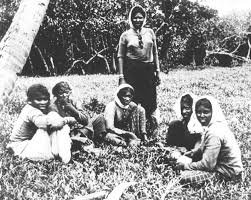
Workers signed five-year contracts—known in corrupted English as “girmit” (from “agreement”).
Most were drawn from North India’s farming and labouring castes.
Once in Fiji, they were assigned to plantations run by the Colonial Sugar Refining Company (CSR).
Work was grueling: 10–12 hours a day under overseers, with deductions from already low wages for food, housing, and penalties.
60,553 Indians transported to Fiji under indenture (1879–1916).
By 1900, Indo-Fijians produced nearly 90% of Fiji’s cane crop.
Indenture officially abolished in 1916, with last contracts expiring in 1920.
Life on the Plantations
Cane cutting demanded stamina: workers hacked through fields under tropical sun, often barefoot.
Overseers enforced discipline with fines and corporal punishment. Despite these hardships, Girmitiyas created new cultural lives—Hindu temples, Muslim mosques, festivals, and shared songs.
Women worked in the fields and also bore the brunt of social upheaval. High mortality, gender imbalance, and cultural dislocation reshaped family structures in early Indo-Fijian communities.
Strikes and Resistance
Girmitiyas were not passive. Protests erupted as early as 1907, and in 1920, a major strike shook the colony after the system’s abolition. These actions laid the groundwork for later cane unionism and Indo-Fijian political leadership.
Case Study: The 1920 Strike
In January 1920, thousands of Indo-Fijian cane workers launched a general strike demanding fair wages and better conditions. Colonial authorities responded harshly, with arrests and violence. Though the strike was broken, it marked the birth of organised Indo-Fijian resistance in the economic and political spheres.