

Table of Contents
From Girmit to Leasehold Farming
Indenture ended, but the work did not. After 1920, Indo-Fijians left the barracks and stepped into a harder freedom: carving farms out of swamp and scrub, negotiating leases with new institutions, bargaining with mill owners for a fair cane price, and stitching villages into a cane belt that fed the country. This is the story of how former indentured workers became Fiji’s tenant farmers—how they built an agricultural economy on leased land and made cane not just an industry, but a way of life.
The Day the Contracts Ended
The formal abolition of indenture in 1916, and the expiry of remaining contracts by 1920, did not send Indo-Fijians home en masse. Many could not afford the return passage; others felt that “home” had shifted under their feet. Children had been born in Fiji, land had become familiar, and the calculus of dignity—after years of hardship—favoured staying. The cane fields that had once
imprisoned them now looked like opportunity.
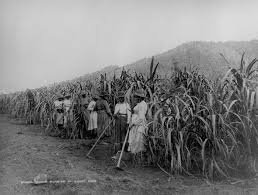
The shift from contract labourer to independent farmer was both natural and radical. Natural, because sugar remained the one sector where skills, tools and markets already existed. Radical, because independence meant stepping into a thicket of law and power that ordinary workers had never navigated: land tenure, mill contracts, price formulas, credit, transport, and the politics of ethnicity. Freedom demanded organisation.
Land, Leases and the New Reality
Most arable land in Fiji was and remains owned communally by iTaukei landowning units. For Indo-Fijians who wished to farm after girmit, ownership was out of reach; access had to come through leases. The colonial government centralised administration of iTaukei land under a trust system (later formalised through the Native Land Trust Board and successor bodies). In practical terms, the new arrangement made two things possible: it offered Indo-Fijians legal security beyond ad hoc deals with chiefs, and it guaranteed that iTaukei proprietors were paid. But it also placed the small farmer in a triangle of unequal power—between landlord, mill, and state.
A typical lease promised a fixed term, rent, and conditions for land care. Tenants were required to clear, plant, maintain drains, and sometimes build access tracks. In exchange, they received predictable tenure and the right to market cane. On paper the system looked balanced; on the ground it demanded labour, cash, and patience. Clearing virgin land meant years of sweat before the first decent harvest. Families lived in thatch or corrugated-iron homes, nursed kerosene lamps, and saved for bullocks and carts before they could dream of a small tractor.
Still, a frontier spirit took hold. In Ba, Tavua, Lautoka, Nadi, Labasa and Seaqaqa, Indo-Fijians pushed inland along river flats and hill shoulders, cutting drains by hand and planting in lines you could sight with a string. Villages that had once been plantation camps evolved into permanent settlements with temples, mosques, schools, and co-operative stores. The cane belt was born.
Post-1920, Indo-Fijians shifted from plantation labour to leasehold smallholdings in the cane belt.
Tenancy brought security and obligation: rent payments, land care, and compliance with lease conditions.
Village infrastructure—schools, temples, mosques—grew alongside cane farms, anchoring permanent settlement.
Farming as a Household Economy
The unit of production in the cane belt was not the “farm” but the household. Husbands, wives, children, kin and neighbours formed shifting teams—planting setts, weeding, cutting, loading. Women managed gardens of vegetables and kept poultry; they also took lead roles in temple committees and school boards, organising fund-raising for buildings and bursaries. Cash was scarce between seasons; credit from the mill, the store, or a moneylender bridged the gap. Every shilling was counted, every sack weighed at the lorry stand.
In the best years, good weather and a fair price allowed modest savings—roofing iron, a sewing machine, a radio, school fees. In bad years, cyclones flattened crops and floods washed out bridges, leaving cane to rot on sodden fields. Even then, farmers harvested what they could, improvising sleds and rafts to ferry bundles to the road. Resilience was a ritual, not a slogan.
Education became the family’s second crop. Many parents declared openly: “We cut cane so the children won’t have to.” The result was a surge of Indo-Fijian teachers, clerks and professionals from the 1950s onward, whose salaries in turn kept village farms afloat.
The Mill, the Lorry, and the Price
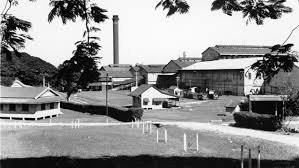
If land tenure formed one wall of the farmer’s world, the mill formed the other. For decades, mill owners controlled schedules, standards, and payment formulas. The calendar revolved around “crushing”—a window of months when cane was harvested and processed. Deliver too early and the sugar content might be low; too late and penalties applied. Lorry queues snaked at the mill gates through the night; drivers brewed tea on primus stoves while cutters dozed on sacks.
Price was the battlefield. Farmers needed a formula that rewarded quality (pol) and compensated for rising costs in kerosene, diesel, fertiliser and transport. Millers argued for discipline and efficiency. Between them grew a tradition of negotiation—sometimes amicable, sometimes explosive—that shaped not only the economics of cane, but the politics of the country.
“On leased land, with borrowed money and family labour, Indo-Fijians turned cane into community.”
Unions, Co-ops and the Politics of Cane
Organisation gave small farmers a collective voice. In different districts, unions emerged to bargain with mill owners and government, to mediate disputes, and to steady families through season shocks. Co-operatives pooled purchasing power for fertiliser and tools, and operated lorries to reduce transport costs. These bodies trained a generation of negotiators who would later stride into municipal chambers and parliament.
The cane belt became a political classroom. Mass meetings under mango trees rehearsed speeches and resolutions. Young men learned the grammar of contracts; young women ran treasuries and minute books. The claim was simple: farmers deserved a fair share of the value they created. The effect was profound: unionism in the fields fed representation in the legislature and shaped national debates about labour rights, electoral systems, and land.
Case Study: A Season in Ba
At first light the cutters move through mist, blades ringing on stone. Rows advance slowly; a boy gathers setts for the next plot. By noon the lorry backs to the headland and a gantry lifts bundles one by one. At dusk a queue builds at the mill; paperwork is checked, a sample crushed, and a receipt printed. Back home, someone reads the price on the radio. If it is week. If not, the meeting house fills on Sunday with talk of costs, formulas and the next delegation to the mill.
The School, the Temple, the Shop
Out of farms grew institutions. The village school taught English and arithmetic along with bhajans and qawwali; it hosted prize-givings where donors offered trophies inscribed with the names of migrants who had cut cane before there were desks. Temples and mosques raised corrugated roofs slick with rain and faith; festivals became annual pledges to the community’s future. A cluster of roadside shops— grocery, tailor, blacksmith—formed micro-economies that kept cash circulating locally.
These institutions were not decorative. They converted seasonal income into permanent assets: literacy, certainties of ritual, a sense of home. The school fed the farm with graduates who could read a lease, calculate interest, and push politely in the right offices. The temple fed courage, reminding families that sacrifice had meaning beyond price.
Shocks, Change and the Lease Clock
Leasehold farming contains a clock. Terms tick down; renewals become negotiations; uncertainty shadows investment. Farmers plant trees they may never harvest and build houses on land that will return to others. For decades the system held because mutual benefit was clear: iTaukei owners earned rent; tenants produced national income; mills ran; towns thrived. But whenever politics sharpened, trust frayed, and lease expiries turned from paperwork into heartbreak.
Economic shocks tested households: global price dips, mill breakdowns, fuel spikes, cyclones. Some families pivoted to vegetables, dairy, or yaqona; others sent one child to Suva or Lautoka for a clerk’s job, turning remittances into fertiliser and school fees. Migration beyond Fiji, especially after political crises, shifted the pattern again: farms became bases for grandparents while adult
children wired money from Sydney, Auckland or Vancouver. Even then, the land remained the family’s moral centre.
Case Study: Lease Expiry and After
When a lease nears expiry, a household faces choices. Renew at a higher rent and invest again; accept a shorter term and cut risk; or move. Each choice carries costs—financial and emotional. Some families relocate to town and open small shops; others lease new blocks deeper along gravel roads; some leave Fiji entirely, sending back funds that keep parents on the land. The pattern is mixed, but the thread is the same: Indo-Fijian identity remains tied to farming even when farming is no longer the main income.
“Cane farming taught a generation to read contracts, keep books, and bargain—skills that travelled from fields to parliament.”
Technology, Credit and the Quiet Revolutions
Over time, bullocks gave way to small tractors; hand-cut drains to mechanical diggers; sacks to bin-loaders. Credit schemes—whether from mills, co-ops or commercial banks—helped families upgrade. Extension officers introduced improved varieties and better timing for fertiliser and weed control. Not every farmer benefited equally, but the overall effect was to lift yields and reduce the sheer physical punishment of farm work. The old romance of the cut remained in songs; the future belonged to logistics.
With technology came new risks—debt burdens, fuel volatility, and dependence on spare parts that arrived on slow ships. Farmers adapted again, keeping the old tools in the shed for when engines coughed or rains made fields impassable. Resilience, once embodied in muscle, now lived in spreadsheets and maintenance logs.
Women, Work and Leadership
In the leasehold era, women’s labour was never auxiliary. They planted and cut alongside men, managed kitchen gardens that carried households through lean months, and kept accounts with a precision that lorry drivers respected. In committees, women chaired fetes, balanced budgets, and steered scholarship funds. The public face of negotiation might have been male, but the backbone of stability was often a mother’s ledger.
As daughters entered teaching and nursing in larger numbers, the shape of labour shifted again. Salaries paid off loans and bought tractors; annual leave coincided with crushing; a new dignity took hold in villages where a daughter’s certificate was as prized as a bumper crop.
Towards a Broader Economy
Leasehold farming did more than produce sugar. It produced citizens skilled in negotiation, bookkeeping, logistics and community leadership. Those skills travelled into retail, transport, manufacturing and the professions. Towns in the cane belt—Ba, Lautoka, Labasa—became launch pads for Indo-Fijian entrepreneurs whose shops and factories diversified Fiji’s earnings. The farm remained the ancestral base; the city, the workshop of ambition.
When later political storms drove migration abroad, that same skillset found ready use in Australia, New Zealand and North America. Remittances returned along the same routes that once carried cane to the mill, now fuelling school rebuilds, temple renovations and home extensions. What began as survival on leased land matured into a transnational household economy.
Indenture ends; families choose to stay; first leases signed; villages stabilise.
Frontier years: land clearing, drains, co-ops; schools and temples established.
Union strength grows; pricing formulas evolve; education lifts the next generation.
Shocks and change: political crises; migration; lease challenges; diversification.
Mixed livelihoods: farming plus wages, small business, and diaspora remittances.