

Table of Contents
Fiji’s 2001 General Election: Rebooting Democracy After the 2000 Crisis
25 August – 5 September 2001 wasn’t just an election window; it was a constitutional reset. One year after the Speight-led hostage crisis and a season of emergency decrees, Fiji went back to the polls under the restored 1997 Constitution. The contest pitted interim Prime Minister Laisenia Qarase’s new Soqosoqo Duavata ni Lewenivanua (SDL) against Mahendra Chaudhry’s Fiji Labour Party (FLP), with the Conservative Alliance–Matanitu Vanua (CAMV) channelling a hardline indigenous current and splinters like the New Labour Unity Party (NLUP) complicating Labour’s base. The outcome was a narrow, negotiated mandate and a prolonged legal after-drama over how power should be shared under the 1997 rules.
The System, Stress-Tested
Unlike the later nationwide-PR era, the 2001 poll ran on the Alternative Vote (AV) with 71 seats: 46 communal (ethnic rolls) and 25 open (universal). Voters ranked candidates and preferences flowed until someone cleared 50%+1. The design elevated pre-poll preference deals and how-to-vote cards, especially where multiple parties competed inside the same community stream.
1997 Framework — quick design snapshot
- Chamber: House of Representatives (71 seats)
- Map: 25 open seats + 46 communal (iTaukei, Indo-Fijian, General, Rotuman)
- Ballot: Alternative Vote (rank, transfers to 50%+1)
- Cabinet rule: Mandatory power-sharing — parties with > 8 seats entitled to proportionate Cabinet posts
These rules, restored by the courts after the 2000 crisis, framed both the ballot and the aftermath.
“2001 wasn’t a normal mid-term. It was the first stress test of the 1997 design after a coup — a ballot folded into a constitutional restoration.”
Backdrop: From Hostage Crisis to Court-Ordered Return
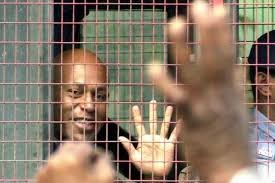
The road to the election began with the May–July 2000 hostage crisis and the abrogation of the Constitution by decree. Courts then re-anchored the system: the High Court ruled in November 2000 that the 1997 Constitution remained in force, and the Court of Appeal upheld that decision on 1 March 2001. The presidency dissolved Parliament and set a path to elections, returning Fiji to the constitutional track. That chronology set the tone: there would be an election, but legitimacy would be judged by the rules, not just by the count.
As campaigning opened, the country was still absorbing the shocks of 2000 — broken coalitions, a shaken civil service, and deep questions about the balance between indigenous protection and universal rights. Parties built their pitches around these post-crisis anxieties; voters were asked to choose between stability, parity, and principle.
Field of Parties & The Fault Lines
SDL coalesced in early 2001 around Qarase with tacit establishment signals — an umbrella for conservative iTaukei currents and a promise of steady hands. FLP leaned into cross-ethnic delivery and its 1999 mandate, but faced splinters: NLUP, led by former FLP deputy Tupeni Baba, sought a centrist lane; the National Federation Party (NFP) tried to recover from its 1999 wipe-out. On the right, CAMV presented a muscular indigenous identity pitch and drew figures linked to the 2000 disruptions. Two smaller vehicles — the United General Party (UGP) in the “General” roll and local independents — rounded out the map.
What the campaigns sounded like
- SDL: Stability, order, cautious re-balancing toward iTaukei interests, and a promise to govern within the restored constitutional frame.
- FLP: Equality before the law, a return to multi-ethnic delivery politics, rebuilding investor confidence, and a warning against legitimising the 2000 putsch via the ballot.
- CAMV: Strong indigenous recognition and conservative social posture; popular in parts of the Fijian communal stream but a constraint on broad coalitions.
- Others (NLUP, NFP, UGP): Policy moderation and institution-first rhetoric; limited reach, but leverage via preferences under AV.
“Under AV, a thousand second choices can matter more than a few thousand firsts. Preference trading became the coin of the realm.”
Election Days & Administration
Polling rolled out between 25 August and 5 September, with a staggered schedule to manage logistics across islands. Observers noted competent administration, a heavy security presence appropriate to the year’s memory, and real competition. AV’s transfers made the count meticulous and slow — a feature, not a bug, for legitimacy. Turnout hovered just under four-fifths of registrants, robust for an election held so close to a national upheaval.
Observation missions praised the overall conduct while recommending clearer voter education for AV preferences, tighter media balance, and a faster results pipeline for multi-day polling/counting.
Results: Narrow Win, Broad Negotiations
Official seat distribution (71):
SDL — 32; FLP — 27; CAMV — 6; NLUP — 2;
NFP — 1; UGP — 1; Independents — 2.
Turnout ≈ 78%.
SDL’s pathway ran through Fijian communal seats and a strong showing in the open list; FLP swept the Indo-Fijian communal stream and added open-seat wins, producing a tight, bipolar chamber. CAMV captured several Fijian communal contests and a sliver of the open tier, while NLUP and UGP each pocketed niche victories. Two independents — including the Rotuman seat — completed the mosaic. The arithmetic made SDL + CAMV the natural governing axis; the constitutional arithmetic soon complicated that.
Quick reference: votes, seats & streams
- Open vs Communal: FLP combined Indo-Fijian communal dominance with key open seats; SDL carried most Fijian communal and a healthy share of open seats; CAMV supplemented SDL in the Fijian stream.
- Registered voters/turnout: ≈ 470k; turnout ≈ 78%.
- Prime Minister: Laisenia Qarase (SDL) via majority support; Mahendra Chaudhry led the Opposition.
Seat totals aggregated from certified results.
“The ballot split the country into two credible pluralities and a handful of kingmakers. Government formation was straightforward; governing under the 1997 rules was not.”
The Power-Sharing Rule & Courtroom Politics
The 1997 Constitution required that any party with more than eight seats be proportionally represented in Cabinet. On paper, that meant FLP — with 27 seats — was entitled to a significant slice of executive portfolios. In practice, the SDL-led government and FLP clashed over whether and how to share power in the wake of 2000. The standoff went to the courts: rulings in 2002–2003 found that excluding FLP was unconstitutional and clarified Labour’s entitlement (e.g., 14 of 30 portfolios). Implementing those rulings took time — a drawn-out test of whether constitutional design could compel coalition in a deeply polarised environment.
“2001 proved that power-sharing can be required by law — but not easily created by trust.”
Issues & Arguments That Mattered
Stability vs. Redress
SDL framed itself as the steward of a careful landing: restore order, avoid shocks, and adjust policy to reassure indigenous Fiji that its place was secure. Labour flipped that lens: stability without equal protection and institutional repair would be a pause, not a path. CAMV pushed further — symbolism, religion, and identity as policy anchors — while NLUP and NFP tried to reclaim the middle with competence talk and rule-of-law themes.
AV’s Incentive Structure
AV’s logic rewarded preference bridges, not just first-choice blocs. That made how-to-vote cards and backroom understandings powerful — in some seats, decisive. In Indo-Fijian communal contests, FLP’s first-preference strength often made transfers a formality. In open and Fijian communal seats, paths to 50% regularly ran through the second and third preferences of smaller parties and independents.
Reputation & Splits
NLUP’s presence signalled real fractures in Labour’s elite coalition and muddied preference flows. NFP retained brand recognition but not momentum; its single seat was a foothold more than a platform. The landscape illustrated the trade-off built into 1997: AV can incentivise moderation and inter-party deals, but it also punishes a party that bleeds even a small share of first preferences in key districts.
Policy Direction & Contested Mandate
Once seated, the SDL-led government emphasised order, economic normalisation, and targeted affirmative-action initiatives framed as social justice for indigenous communities. Labour countered with institution-building, equal treatment before the law, and a push to implement court-ordered power-sharing in good faith. Parliament’s rhythm became a barometer for the broader settlement: on some files cooperation was possible; on others, stalemate exposed how thin the consensus remained.
In the provinces, the political conversation filtered through the channels of chiefs, churches, union halls, and cane belts. The communal-seat architecture made these intermediaries central — a reminder that Fiji’s electoral geography in 2001 was as much about networks as it was about maps.
“Communal seats stabilised representation; they also baked identity into the rules of contest.”
How 2001 Rewired the Next Decade
The 2001 outcome didn’t just choose a government; it set the script for the 2000s. SDL emerged as the dominant iTaukei-led vehicle, absorbing or eclipsing older right-of-centre brands and later drawing parts of CAMV into its orbit. FLP, still the premier Indo-Fijian-anchored party with cross-ethnic pockets, was strong enough to demand constitutional parity but not strong enough to set the governing tone from Opposition. The courts demonstrated teeth; the executive learned how to negotiate — and push — the limits of the 1997 contract.
Institutionally, 2001 highlighted why design choices matter. Communal seats stabilised representation but entrenched identity as the frame of contest. AV rewarded bridges but still mapped politics onto ethnic streams. The long after-story — arguments about Cabinet quotas, the constitutional status of affirmative-action policy, and later system reform — flows from the frictions exposed here.
“If 1999 was a mandate and 2000 a rupture, 2001 was the repair — imperfect, legalistic, and essential.”
Researcher Takeaways
- Restoration election: Conducted under court-reaffirmed 1997 rules; a template for using judicial authority to restart democratic life.
- AV dynamics: Preference flows were pivotal outside FLP’s Indo-Fijian strongholds; micro-alliances shaped marginal seats.
- Power-sharing jurisprudence: Case law around Cabinet composition is central to understanding executive–legislative behaviour in 2002–2004.
- Party system reset: SDL consolidated the conservative/iTaukei lane; FLP held the reform/multi-ethnic lane; satellites (CAMV, NLUP, UGP) mattered via transfers.
- Path dependence: Tensions born here — design vs trust, identity vs delivery — echo through 2006 and into the post-2013 electoral redesign.
Quick reference: turnout & seat distribution
- Turnout: ≈ 78% of registered voters.
- Seats (71): SDL 32; FLP 27; CAMV 6; NLUP 2; NFP 1; UGP 1; Independents 2.
- Government: SDL-led; power-sharing litigation followed.
Seat totals/turnout from certified results and observer reports.
Show the list of the 2001 elected MPs (by constituency)
| # | Constituency | Elected MP | Party |
|---|---|---|---|
| 1 | Lautoka City | Ganeshwar Chand | FLP |
| 2 | Nadi Rural | Gunasagaran Gounder | FLP |
| 3 | Lautoka Rural | Udit Narayan | FLP |
| 4 | Tavua | Anand Babla | FLP |
| 5 | Vuda | Vyas Deo Sharma | FLP |
| 6 | Vanua Levu West | Surendra Lal | FLP |
| 7 | Nadroga | Lekh Ram Vayeshnoi | FLP |
| 8 | Nasinu | Pratap Chand | FLP |
| 9 | Ba East | Unknown | FLP |
| 10 | Ba West | Unknown | FLP |
| 11 | Cakaudrove/West Macuata | Unknown | FLP |
| 12 | Labasa/Nabua | Unknown | FLP |
| 13 | Macuata East | Unknown | FLP |
| 14 | Nadi Urban | Unknown | FLP |
| 15 | Nausori | Unknown | FLP |
| 16 | Navua | Unknown | FLP |
| 17 | North Eastern | Unknown | FLP |
| 18 | North Western | Unknown | FLP |
| 19 | Rewa | Unknown | FLP |
| 20 | Suva City | Unknown | FLP |
| 21 | Tailevu | Unknown | FLP |
| 22 | Ba East | Unknown | Unknown |
| 23 | Ba West | Unknown | Unknown |
| 24 | Bua | Unknown | Unknown |
| 25 | Cakaudrove East | Ratu Naiqama Lalabalavu | CAMV |
| 26 | Cakaudrove West | Ratu Rakuita Vakalalabure | CAMV |
| 27 | Kadavu | Joji Madraiwiwi | SDL |
| 28 | Lau | Laisenia Qarase | SDL |
| 29 | Lomaiviti | Ratu Inoke Kubuabola | SDL |
| 30 | Macuata East | Isireli Leweniqila | SDL |
| 31 | Macuata West | Josefa Dimuri | SDL |
| 32 | Nadroga/Navosa | Ratu Osea Gavidi | CAMV |
| 33 | Naitasiri East | Ratu Inoke Takiveikata | SDL |
| 34 | Naitasiri West | Samuela Nawalowalo | SDL |
| 35 | Namosi | Ratu Suliano Matanitobua | SDL |
| 36 | Ra | Jonetani Galuinadi | SDL |
| 37 | Rewa | Simione Kaitani | SDL |
| 38 | Serua | Pio Wong | SDL |
| 39 | Tailevu North | George Speight (voided) | CAMV |
| 40 | Tailevu South Lomaiviti | Josefa Vosanibola | SDL |
| 41 | Tailevu South | Viliame Naupoto | SDL |
| 42 | Tailevu South Urban | Ted Young | SDL |
| 43 | Yasawa/North Western | Jonetani Navakasuasua | SDL |
| 44 | Nasinu Urban | Joji Uluinakauvadra | SDL |
| 45 | North Eastern (General) | David Christopher | UGP |
| 46 | South Eastern (General) | William (Bill) Aull | SDL |
| 47 | Western Central (General) | Mick Beddoes | UGP |
| 48 | Rotuman Communal | Marieta Rigamoto | Independent |
| 49 | Ba (Open) | Mahendra Chaudhry | FLP |
| 50 | Nadi (Open) | Krishna Prasad | FLP |
| 51 | Lautoka (Open) | Daniel Urai | FLP |
| 52 | Vuda (Open) | Vijay Singh | FLP |
| 53 | Tavua (Open) | Pravin Singh | FLP |
| 54 | Suva City (Open) | Ofa Duncan | NLUP |
| 55 | Laucala (Open) | Losena Salabula | SDL |
| 56 | Samabula Tamavua (Open) | Manoa Dobui | SDL |
| 57 | Lami (Open) | Kaliopate Tavola | SDL |
| 58 | Cunningham (Open) | Solomone Naivalu | SDL |
| 59 | Labasa (Open) | Poseci Bune | FLP |
| 60 | Macuata East (Open) | Krishna Datt | FLP |
| 61 | Cakaudrove West (Open) | Manasa Tugia | CAMV |
| 62 | Bua Macuata West (Open) | Isireli Tuvuki | SDL |
| 63 | Ra (Open) | George Shiu Raj | SDL |
| 64 | Tailevu North Ovalau (Open) | Josefa Vosanibola | SDL |
| 65 | Tailevu South Lomaiviti (Open) | Adi Asenaca Caucau | SDL |
| 66 | Lomaivuna Namosi Kadavu (Open) | Ted Young | SDL |
| 67 | Lau Taveuni Rotuma (Open) | Savenaca U. Draunidalo | Independent |
| 68 | Nausori Naitasiri (Open) | Asaeli Masilaca | SDL |
| 69 | Nasinu Rewa (Open) | Peniasi Silatolu | SDL |
| 70 | Nadroga (Open) | Jonetani G. Galuinadi | SDL |
| 71 | Serua Navosa (Open) | Pio Wong | SDL |
| 72 | Yasawa Nawaka (Open) | Perumal Mupnar | FLP |
| 73 | Magodro (Open) | Gyan Singh | FLP |
Note: Some entries were supplied as “Unknown”. Keep this table synced to your verified FEO/official roster and replace placeholders as you confirm names and parties.
Sources & further reading
- Fiji Elections Office — certified results & seat streams.
- Commonwealth Observer Group — conduct of the 2001 election (AV, logistics, context).
- IFES Election Guide — election profile & party snapshot.
- Academic analyses of Fiji’s 1997 framework, AV mechanics, and power-sharing jurisprudence.
Use these to cross-check figures quoted on site pages.