

Table of Contents
Fiji’s 2014 General Election — FijiFirst’s Landslide and the First Vote Under the 2013 Constitution
17 September 2014 marked Fiji’s first national election since the 2006 military coup and the first held under the new 2013 Constitution. The poll was a stress test of a system designed to bury race-based politics and to prove that a coup-era administration could win a democratic mandate.
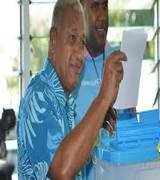
Voters turned out in large numbers, and the result was emphatic: FijiFirst, the new party led by Frank Bainimarama, won a commanding victory and formed government, while a reorganised opposition returned to Parliament under SODELPA with the NFP re-entering as a smaller liberal voice.
Why 2014 Was a Milestone
2014 was the hinge between coup rule and constitutional democracy. It capped eight years of interim governance and inaugurated a voting system that replaced ethnic entitlements with a common citizenry principle. The election’s success mattered twice over: it restored an elected Parliament and validated a new set of ground rules meant to make future coups less politically attractive.
“2014 was not just a ballot — it was a system reset: one national constituency, open-list PR, 5% threshold, and the end of race-based seats.”
What Changed: The 2013 Constitution vs Earlier Rules
From ethnic seats to one national roll
Before 2013 (e.g., under the 1997 Constitution), most parliamentary seats were communal—reserved for iTaukei, Indo-Fijians, or “General” electors—alongside a set of “open” seats. Voters were tied to ethnic rolls and geographic constituencies, and elections used a preferential/AV system. This entrenched bloc voting by ethnicity and empowered communal brokers.
From 2014, the 2013 Constitution introduced a single nationwide constituency with open-list proportional representation using D’Hondt and a 5% threshold. Every voter cast one vote for a candidate on a common roll; party totals determined seats; candidates with the highest personal votes filled their party’s seats. There were no ethnic or local seats, and the voting age dropped to 18.
Practical effects
- Cross-ethnic competition: Parties had to appeal nationally, not just communally. FijiFirst built a broad multi-ethnic vote; SODELPA consolidated much of the iTaukei traditionalist vote; NFP re-entered as a liberal, policy-oriented minority.
- Threshold discipline (5%): Kept very small parties (e.g., FLP, PDP in 2014) out of Parliament, simplifying coalition math but under-representing some strands of opinion.
- Leader-centric incentives: A single national district concentrates attention on a few recognisable leaders; Bainimarama’s personal vote translated into coattails for FijiFirst’s slate.
- Local linkage trade-off: With no geographic electorates, MPs lacked a fixed “home” constituency; accountability and constituency service became more centralised and party-mediated.
Parties & Key People Who Came to Prominence
- FijiFirst (FF) — Bainimarama’s new vehicle, built on delivery (infrastructure, schooling), unity (“we are all Fijians”), and a centralised governing style. Dominant winner in 2014.
- SODELPA — Successor to SDL, led by Ro Teimumu Kepa; emphasised iTaukei identity, chiefly traditions, land, and restoring bodies like the Great Council of Chiefs. Returned as main opposition.
- National Federation Party (NFP) — Under Biman Prasad, Fiji’s oldest party re-entered Parliament with a policy-first, multi-ethnic pitch (economy, institutions). Small but durable third force.
- FLP / PDP — Legacy labour/union strands that failed to clear 5% in 2014; their votes became “wasted” under the threshold rule.
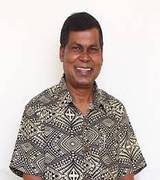
Leadership profiles (2014)
- Frank Bainimarama — From coup leader to elected PM; converted a “state-as-delivery” brand and unity rhetoric into a national mandate.
- Aiyaz Sayed-Khaiyum — Attorney-General/strategist; central to legal architecture (2013 Constitution, electoral/party frameworks) and FijiFirst’s campaign machinery; emerged as a legitimately elected power-broker.
- Ro Teimumu Kepa — High chief and SODELPA leader; became Fiji’s first woman Leader of the Opposition after 2014.
- Biman Prasad — NFP leader; restored a liberal, technocratic opposition voice; later a pivotal coalition figure (context for subsequent cycles).
Campaign & Issues
“The ballot asked two questions at once: Return to Parliament? and Under what rules? 2014 answered both with a clear ‘yes’ to a new, nationalised model.”
FijiFirst foregrounded free education, roads/bridges, poverty programs, and a unifying national identity. SODELPA stressed indigenous institutions, social conservatism, land security, and local voice. NFP pushed governance, economic management, media space, and small-business growth. The campaign occurred within a tightly regulated environment (party/media laws; blackout period), but observers judged the poll day credible overall.
Election Day & Turnout
Voting took place on 17 September 2014 with extensive pre-polling in remote areas. Public enthusiasm was high after eight years without a Parliament; turnout reached roughly ~85%. The Multinational Observer Group reported an orderly process and broad confidence in the count, alongside notes about the constrained media climate and the learning curve for the new national ballot.
Results
Official Results (50 seats)
FijiFirst — ~59.2% → 32 seats
SODELPA — ~28.2% → 15 seats
NFP — ~5.5% → 3 seats
Other parties — each < 5% → 0 seats
Official results & turnout (quick reference)
- Turnout: ~85%
- Seat allocation: FijiFirst 32; SODELPA 15; NFP 3
- Prime Minister: Frank Bainimarama (FijiFirst)
Figures reflect the final certified outcome for the 2014 general election.
Implications of the New Rules
Threshold discipline vs representation
The 5% threshold streamlined Parliament and reduced fragmentation, but under-represented smaller currents (e.g., FLP, PDP) whose aggregate votes did not convert to seats. It encouraged pre-election alliances and tilted incentives toward a few viable parties.
One nation, one list — the trade-offs
A single nationwide constituency achieved “one person, one vote, one value,” and nudged parties toward national, cross-ethnic messaging. The trade-off: weaker local MP-constituency links and more leader-centric contests with heavy emphasis on a handful of nationally recognisable figures.
Aftermath
Frank Bainimarama was sworn in as Prime Minister; Aiyaz Sayed-Khaiyum retained powerful portfolios; Ro Teimumu Kepa became Leader of the Opposition; and Parliament elected Dr Jiko Luveni as Fiji’s first woman Speaker — milestones that signalled both continuity and change. Policy direction focused on infrastructure and service delivery, with persistent debate over media space, institutional balance, and how best to reflect indigenous voices under the new constitutional order.
Why 2014 Matters for Researchers
- System design effects: Nationwide PR + 5% threshold reshaped competition, producing a dominant party, a consolidated opposition, and a durable small third force.
- From communal to national: Abolishing race-based seats created space for cross-ethnic coalitions (notably in FijiFirst’s support base).
- Leader effects: Open-list PR in one national district rewards highly recognisable leaders and centralised campaign strategy.
- Path dependence: 2014 set the template that framed the tighter 2018 contest and the hung-parliament drama of 2022.
Verified: 2014 Elected Members of Parliament (50)
Show the verified list of the 50 elected MPs (names & party)
| # | Name | Party |
|---|
Verification note: This table must match the certified 2014 elected list exactly (no Speaker if not elected; no replacements). Update only from your verified source file.
Sources & further reading
- Fiji Elections Office — 2014 official results, turnout, and seat allocation.
- Multinational Observer Group (2014) — overall assessment of the poll.
- RNZ Pacific / The Fiji Times — campaign & aftermath coverage.
- IFES / term summaries — consolidated electoral references.