
Table of Contents
Fiji’s 1994 General Election: A Snap Return under Unreformed Rules
1994 sent Fiji back to the polls after a budget crisis toppled the previous Parliament. The election ran again under the 1990 Constitution’s communal design. Indo-Fijian politics carried the same tension as 1992—resist the rules vs represent your people—but party strategy largely prioritised continued parliamentary presence. The result sustained an SVT-led government while keeping NFP and FLP voices in the House—and it nudged Fiji closer to the 1997 reforms that would rebalance representation.
The System, Unchanged — But Politics in Motion
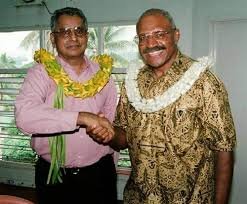
later central to the 1997 settlement. Wikimedia (CC)
Like 1992, all 70 seats were single-member communal (37 iTaukei, 27 Indo-Fijian, 5 General, 1 Rotuman). Indo-Fijian organisers persisted with an outward-facing critique of the system while contesting seats. The measure of success in 1994 was not seat share alone, but whether the post-election atmosphere might finally bend toward constitutional talks.
SVT campaigned on discipline and order; NFP on constitutionalism and economic steadiness; FLP on equity and labour protections. Two additional currents flickered: regional iTaukei groupings challenging SVT in pockets, and a cautious cross-ethnic appetite for normal politics after years of upheaval.
Why 1994 mattered:
- It proved that parliamentary engagement by Indo-Fijian parties would continue despite unfair rules.
- It created space for the Reddy–Rabuka interlocution that produced the 1997 Constitution.
- It normalised peaceful alternation of mandates under civic pressure rather than decree.
Resistance Continued — Why Most Did Not Boycott
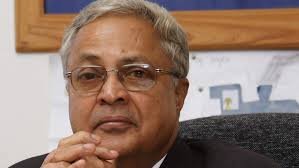
relentless on dignity and cost-of-living.
Indo-Fijian civic groups kept up pressure—teach-ins, petitions, diaspora briefings—but a general boycott was neither achievable nor, in many districts, desired. Families needed MPs to mediate with the state; unions needed voices on wage councils and labour law; smallholders needed help with land leases and inputs. The parties therefore pursued a dual mandate: defend community interests inside Parliament while negotiating toward a fairer constitutional compact.
“The 1994 ballot wasn’t an endorsement of the rules; it was a refusal to abandon representation while pushing for change.” Campaign reflection, Indo-Fijian organiser
Campaign Themes
Economy & livelihoods
Cost-of-living and sugar industry margins dominated many Indo-Fijian constituencies. Wage growth lagged; household budgets were thin. FLP foregrounded equity instruments and worker protections; NFP stressed predictability and macro discipline.
Identity & institutions
SVT emphasised customary guardrails; NFP and FLP argued that constitutional fairness was itself a stabiliser. Quietly, networks that would enable the 1997 compromise were already laying track.
Normal politics after rupture
Voters across communities showed fatigue with crisis language. The appetite was for competent service, less patronage, and a chance for leaders to solve practical problems.
Results
Outcome (70 seats): An SVT-led government again took shape with support from allied iTaukei figures and smaller partners. NFP secured a strong Indo-Fijian bench; FLP held key footholds. General Electors returned UGP/Independents; the Rotuman seat again elected an Independent. The broader legacy of 1994 was post-election negotiation that helped yield the 1997 reforms.
Quick reference: rules & parties
- System: 70 single-member communal seats (37 iTaukei, 27 Indo-Fijian, 5 General, 1 Rotuman).
- Major players: SVT (governmental bloc); NFP & FLP (Indo-Fijian benches); UGP; regionals (PANU/FAP in some areas); Independents.
- Reform horizon: Post-1994 talks set the stage for the 1997 Constitution (re-opening the map to fairer representation).
Research Takeaways from 1994
- Continuity with change pressure: System unchanged; political incentives pushed leaders toward a redesign.
- Representation vs reform is a false choice: Parties balanced both; voters rewarded service and seriousness.
- Pre-negotiation mattered: The “Reddy–Rabuka” channel was as important as the seat tally.
Verified: 1994 Elected Members of the House of Representatives (70)
List supplied by your project notes. Grouped by constituency type; parties as listed.
Show/hide the verified MPs table (1994)
| # | Constituency | Elected MP | Party |
|---|---|---|---|
| Indo-Fijian Communal Seats | |||
| 1 | Ba East/Tavua Rural (Indian Communal) | Hardayal Singh | FLP |
| 2 | Ba Urban (Indian Communal) | Vinod Patel | NFP |
| 3 | Ba West (Indian Communal) | Mahendra Chaudhry | FLP |
| 4 | Bua (Indian Communal) | Raman Pratap Singh | NFP |
| 5 | Cakaudrove (Indian Communal) | Satish Chandra Gulabdas | NFP |
| 6 | Cuvu/Malomalo South/Sigatoka Urban (Indian Communal) | Mohammed Azam Khalil | NFP |
| 7 | Labasa (Indian Communal) | Shree Ramlu | NFP |
| 8 | Lami/Naitasiri South/Kadavu (Indian Communal) | Shiu Charan | NFP |
| 9 | Lautoka City (Indian Communal) | Ali Ayub Husain | NFP |
| 10 | Lautoka Rural (Indian Communal) | Jai Ram Reddy | NFP |
| 11 | Lautoka South/Veiseisei/Yasawa (Indian Communal) | Vinod Maharaj | FLP |
| 12 | Macuata East (Indian Communal) | Parmod Chand | NFP |
| 13 | Macuata West (Indian Communal) | Charan Jeath Singh | NFP |
| 14 | Magodro/Ba Rural (Indian Communal) | Krishna Datt | FLP |
| 15 | Malomalo North/Nadi Rural (Indian Communal) | Harish Chandra Sharma | NFP |
| 16 | Nadi Urban (Indian Communal) | Dorsami Naidu | NFP |
| 17 | Nadroga East (Indian Communal) | Lekh Ram Vayeshnoi | FLP |
| 18 | Nasinu East/Rewa East (Indian Communal) | Harnam Singh Golian | NFP |
| 19 | Nasinu North/Nausori (Indian Communal) | Narendra Arjun | NFP |
| 20 | Nasinu South/Colo-i-Suva (Indian Communal) | Sayed Abdul Khaiyum | NFP |
| 21 | Navosa/Serua/Namosi/Naitasiri West/Rewa West (Indian Communal) | Maan Singh | NFP |
| 22 | Nawaka/Sabeto (Indian Communal) | Shiu Sharan Sharma | FLP |
| 23 | Ra Central (Indian Communal) | Dhirendra Kumar | NFP |
| 24 | Suva City Central (Indian Communal) | Harilal Manilal Patel | NFP |
| 25 | Suva City Suburban (Indian Communal) | James Raghwan Raman | NFP |
| 26 | Tailevu/Ra East/Lomaiviti/Lau/Rotuma (Indian Communal) | Aptar Singh | NFP |
| 27 | Tavua/Ra West (Indian Communal) | Anand Babla | FLP |
| iTaukei (Fijian) Communal & Regional Seats | |||
| 28 | Ba East | Ratu Kaliova Mataitini | SVT |
| 29 | Ba West | Ratu Finau Mara | SVT |
| 30 | Bua | Isireli Leweniqila | SVT |
| 31 | Cakaudrove East | Ratu Naiqama Lalabalavu | SVT |
| 32 | Cakaudrove West | Ratu Josefa Dimuri | SVT |
| 33 | Kadavu | Konisi Yabaki | SVT |
| 34 | Lau | Ratu Tevita Momoedonu | SVT |
| 35 | Lomaiviti | Ratu Inoke Kubuabola | SVT |
| 36 | Macuata East | Joketani Cokanasiga | SVT |
| 37 | Macuata West | Ratu Josefa Vosanibola | SVT |
| 38 | Nadroga/Navosa | Ratu Osea Gavidi | PANU |
| 39 | Naitasiri East | Ratu Inoke Takiveikata | SVT |
| 40 | Naitasiri West | Samuela Nawalowalo | SVT |
| 41 | Namosi | Ratu Suliano Matanitobua | SVT |
| 42 | Ra | Jonetani Galuinadi | SVT |
| 43 | Rewa | Simione Kaitani | SVT |
| 44 | Serua | Pio Wong | FAP |
| 45 | Tailevu North | Poseci Bune | FAP |
| 46 | Tailevu South Lomaiviti | Adi Kuini Speed | FAP |
| 47 | Tailevu South | Josefa Vosanibola | SVT |
| 48 | Tailevu South Urban | Joji Uluinakauvadra | SVT |
| 49 | Yasawa/North Western | Isikeli Nadalo | SVT |
| 50 | Nasinu Urban | Ratu Josefa Dimuri | SVT |
| 51 | Naitasiri Central | Peceli Rinakama | SVT |
| 52 | Tailevu Central | Isimeli Bainimala | SVT |
| 53 | Rewa North | Mosese Qionibaravi | SVT |
| 54 | Cakaudrove Central | Ratu Apenisa Vukivuki | SVT |
| 55 | Lomaiviti Central | Ratu Timoci Vesikula | SVT |
| 56 | Ra North | Apisai Tora | PANU |
| 57 | Ba North | Ratu Isireli Vuibau | SVT |
| 58 | Ba Central | Ratu Tevita Momoedonu | SVT |
| 59 | Ba South | Josefa Dimuri | SVT |
| 60 | Cakaudrove North | Ratu Epeli Ganilau | SVT |
| 61 | Lau/Lomaiviti Outer Islands | Ratu Jone Yavala Kubuabola | SVT |
| 62 | Macuata Central | Ratu Josefa Dimuri | SVT |
| 63 | Nadroga Central | Ratu Osea Gavidi | PANU |
| 64 | Tailevu West | Adi Kuini Speed | FAP |
| General Electors & Rotuman | |||
| 65 | North Eastern (General) | David Pickering | UGP |
| 66 | South Eastern (General) | Graeme Leung | UGP |
| 67 | Western Central (General) | Bill Aull | UGP |
| 68 | Suva City (General) | Kenneth Zinck | Independent |
| 69 | Lautoka (General) | Clive Sharma | UGP |
| 70 | Rotuman Communal | Marieta Rigamoto | Independent |
Supplied seat/MP list used verbatim; headings added for readability.
Sources & further reading
- 1990 Constitution; budget crisis reporting leading to 1994 dissolution.
- Party platforms (SVT, NFP, FLP); regional groupings (PANU, FAP) statements.
- Project archives for the seat-by-seat winners (this page’s table).