Table of Contents
Fiji General Election — 1982: The Alliance Holds On
The 1982 general election was Fiji’s last full test of the post-independence order before the upheavals of the mid-1980s.
Ratu Sir Kamisese Mara’s Alliance Party retained power, but the campaign exposed deepening fault lines:
an Indo-Fijian electorate pushing for change through a divided National Federation Party (NFP),
cane-belt discontent in the west, and the first stirrings of a cross-class reform mood that would later fuel the rise of Labour.
The Alliance still won — but more narrowly than before — foreshadowing the political shock of 1987.
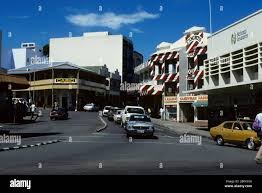
the commercial and political heart of Fiji’s democracy. (Wikimedia Commons)
Context: A Strained Post-Independence Compact
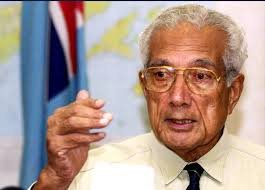
steward of the independence era
defending continuity in 1982. (Wikimedia)
By 1982 Fiji had been independent for twelve years. In that time the Alliance Party governed continuously under Ratu Sir Kamisese Mara, blending chiefly legitimacy with a developmental state. The constitutional architecture — communal seats alongside national, cross-voting constituencies — aimed to stabilise multiethnic politics by rewarding moderation. It worked—until it didn’t. A global downturn, sugar price volatility, and the politics of agricultural land leases pressed on daily life, especially for Indo-Fijian cane farmers in Ba, Lautoka, and Labasa.
The opposition National Federation Party (NFP) was still the traditional Indo-Fijian vehicle, but the scars of the Flower vs Dove split in 1977 had not fully healed. A consolidation effort was underway by 1982, with veteran Siddiq Koya and rising figure Jai Ram Reddy offering different tones of leadership. Yet doubts lingered: would the party hold under pressure? In the west, the Western United Front (WUF) emerged as a regional protest current — indigenous and Indo-Fijian farmers demanding fairer returns and respect for western priorities.
“The independence compact still held, but the glue was thinning — and voters could feel it.” USP political commentary, early 1982
Quick reference: How the electoral system worked in 1982
- Communal seats: elected from ethnic rolls (Fijian, Indo-Fijian, General).
- National seats: candidates stood on communal tickets but were elected by the whole electorate — designed to reward cross-ethnic appeal.
- Implication: The Alliance leaned on Fijian and General strength; NFP dominated Indo-Fijian communals; national seats decided who governed.
Design intended to moderate ethnic competition by incentivising coalition-minded campaigning.
The Campaign: Unity vs Fracture
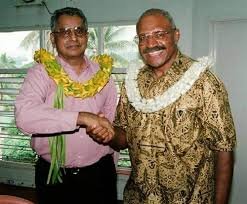
one of the faction leaders (Wikimedia)
The Alliance built its message around stewardship and calm. In rural halls and village greens, Mara evangelised continuity: land protections, chiefly guardianship, and a “big tent” for moderates of every background. The NFP, strongest in the cane belt, hammered cost-of-living pressures and lease insecurity, while pledging professional, less patronage-bound government. In the towns and the professions, Reddy traded on legal credibility; across the party, organisers worked to reassure Indo-Fijian voters that the NFP would not repeat 1977’s internal meltdown.
Western United Front (WUF) complicated the map. Its leaders — including Isikeli Nadalo and Apisai Tora — made a regionalist case: the west carried Fiji’s export engine but lacked political respect. WUF did not command a national crest, but it bit into the Alliance’s traditional base in the western provinces and signalled a cross-ethnic agrarian impatience.
“Alliance unity was a story; western discontent was a feeling.” Ba rally report, March 1982
Results: A Narrower Alliance Victory
The verdict mixed continuity with warning. The Alliance won a working majority — 28 of 52 seats — while the NFP and allies tallied 24. The margins were thinner than in earlier cycles. As usual, communal seats broke along familiar lines: Alliance dominance among Fijian and General constituencies; NFP command over Indo-Fijian communal seats. The balance turned, again, on the national seats, where the Alliance’s brand of stability plus minorities’ support stayed just ahead.
What the count implied:
- The Alliance could still mobilise a national coalition, but the floor had shifted lower.
- NFP’s organisational recovery was real, yet unity doubts capped its reach beyond communal strongholds.
- WUF, seatless, nonetheless dented Alliance comfort in the west — a harbinger for mid-decade politics.
Quick reference: Headline numbers (1982)
- Total seats: 52 (communal + national)
- Result: Alliance 28; NFP and allies 24
- Turnout: ~80% (contemporary reporting)
- Decisive battleground: National seats
Aftermath: Stability with a Warning Label
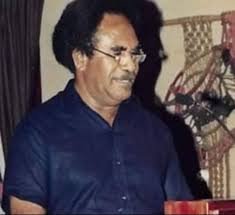
grievance and cross-ethnic farmer politics. (Wikimedia)
Mara remained Prime Minister, but the myth of invincibility was gone. In the House, a stiffened Opposition pressed the government on leases, wages, and education spending. WUF’s pressure — amplified by talk-radio and cooperative halls — forced the Alliance to acknowledge western equity concerns. Inside the NFP, the vote sharpened generational change: Koya’s moral authority was intact but frayed; Reddy’s credibility grew with the urban middle class. Yet factional scar tissue limited the party’s national reach.
Beyond personalities, the election accelerated a search for a new idiom of politics. Community groups, unions, and church leaders began articulating a vocabulary of fairness that sounded less deferential and more policy-specific: clean procurement, realistic cane pricing, honest utilities, and a calmer state-citizen relationship. This mood would soon find a party-political vehicle: the Fiji Labour Party (FLP), launched in 1985.
“1982 felt like the last ‘comfortable’ win. The ground was already moving under everyone’s feet.” Suva political desk, post-election wrap
Legacy: Calm Before the Storm
In retrospect, 1982 reads as the calm before the 1987 storm. The Alliance still commanded a national majority, but the direction of travel was unmistakable: cane-belt discontent, Indo-Fijian impatience with communal arithmetic, an Opposition learning coherence, and a new cross-class reformism forming around labour dignity and clean government. The innovations of the 1970 compact had stabilised early independence; by the 1980s, they also contained politics in a way voters increasingly questioned.
When FLP arrived, it drew precisely on these fault lines — professional reformers meeting union organisers — and by 1987 the logic of coalition would defeat the logic of inevitability. The tragedy was that Fiji would then confront whether the rules could survive their own success. But in 1982, the future was still negotiable; the electorate had signalled for change, not rupture.
Elected Members of Parliament — 1982 (52 seats)
Source: House of Representatives list for the 1982–1987 term.
Show / hide the full MPs list (by constituency type)
Fijian Communal Constituencies (12 seats)
| # | Constituency | Member | Party |
|---|---|---|---|
| 1 | Ba–Nadi | Apisai Tora | Alliance |
| 2 | Bua–Macuata | Militoni Leweniqila | Alliance |
| 3 | Cakaudrove | Jone Naisara | Alliance |
| 4 | Kadavu–Tamavua–Suva Suburban | Akariva Nabati | Alliance |
| 5 | Lau–Rotuma | Jonati Mavoa | Alliance |
| 6 | Lomaiviti–Muanikau | Mosese Qionibaravi | Alliance |
| 7 | Nadroga–Navosa | Apenisa Kurisaqila | Alliance |
| 8 | Naitasiri | Livai Nasilivata | Alliance |
| 9 | Ra–Samabula–Suva | Kolinio Qiqiwaqa | Alliance |
| 10 | Rewa–Serua–Namosi | Tomasi Vakatora | Alliance |
| 11 | Tailevu | William Toganivalu | Alliance |
| 12 | Vuda–Yasawa | Josaia Tavaiqia | Alliance |
Indo-Fijian Communal Constituencies (12 seats)
| # | Constituency | Member | Party |
|---|---|---|---|
| 13 | Ba | Navin Patel | NFP |
| 14 | Ba–Lautoka Rural | Siddiq Koya | NFP |
| 15 | Labasa–Bua | Mohammed Sadiq | NFP |
| 16 | Lautoka | Jai Ram Reddy | NFP |
| 17 | Nadi | H. M. Lodhia | NFP |
| 18 | Nasinu–Vunidawa | Satendra Nandan | NFP |
| 19 | Nausori–Levuka | Sarda Nand | NFP |
| 20 | Savusavu–Macuata East | Subramani Basawaiya | NFP |
| 21 | Sigatoka | Anirudh Kuver | NFP |
| 22 | Suva City | Irene Jai Narayan | NFP |
| 23 | Suva Rural | Vijay Parmanandam | NFP |
| 24 | Tavua–Vaileka | Ram Sami Goundar | NFP |
General Communal Constituencies (3 seats)
| # | Constituency | Member | Party |
|---|---|---|---|
| 25 | Northern & Eastern | Hugh Thaggard | Alliance |
| 26 | South–Central | James Ah Koy | Alliance |
| 27 | Western | Benjamin Wise | Alliance |
Fijian National Constituencies (10 seats)
| # | Constituency | Member | Party |
|---|---|---|---|
| 28 | East Central | Penaia Ganilau | Alliance |
| 29 | Lau–Cakaudrove–Rotuma | Kamisese Mara | Alliance |
| 30 | North-Central | Temo Sukanaivalu | NFP |
| 31 | North-Eastern | Filimone Nalatu | WUF |
| 32 | North-Western | Koresi Matatolu | NFP |
| 33 | South-Central | Solomone Momoivalu | Alliance |
| 34 | South-Eastern | Semesa Sikivou | Alliance |
| 35 | South-Western | Isikeli Nadalo | WUF |
| 36 | Suva | David Toganivalu | Alliance |
| 37 | Vanua Levu North & West | Soso Kotonivere | NFP |
Indo-Fijian National Constituencies (10 seats)
| # | Constituency | Member | Party |
|---|---|---|---|
| 38 | East Central | K. R. Latchan | Alliance |
| 39 | Lau–Cakaudrove | Ahmed Ali | Alliance |
| 40 | North-Central | Vijay R. Singh | NFP |
| 41 | North-Eastern | Iqbal Khan | NFP |
| 42 | North-Western | Jai Raj Singh | NFP |
| 43 | South-Central | Ramanlal Kapadia | Alliance |
| 44 | South-Eastern | Beniram Rambissesar | Alliance |
| 45 | South-Western | Harish Sharma | NFP |
| 46 | Suva | Mohammed Ramzan | Alliance |
| 47 | Vanua Levu North & West | Santa Singh | NFP |
General National Constituencies (5 seats)
| # | Constituency | Member | Party |
|---|---|---|---|
| 48 | Eastern | Charles Walker | Alliance |
| 49 | Northern | James Shankar Singh | NFP |
| 50 | Southern | Peter Stinson | Alliance |
| 51 | Vanua Levu–Lau | Ted Beddoes | Alliance |
| 52 | Western | Arthur Jennings | NFP |
Abbrev: Alliance = Alliance Party; NFP = National Federation Party; WUF = Western United Front.