Table of Contents
Fiji General Election — March 1977: When the Alliance Lost and Power Slipped Away
March 1977 was Fiji’s first real test of alternation in power since independence. Against the run of form, the National Federation Party (NFP) finished ahead of Ratu Sir Kamisese Mara’s Alliance Party.
Yet victory dissolved into paralysis: factional rancour inside the NFP made it unable to present a united government to the Governor-General. In a constitutional drama that still animates Fiji’s political storytelling, Ratu Sir George Cakobau retained Mara as caretaker Prime Minister,
and the country returned to the polls six months later.
Context: A Stable Order Meets Its First Real Shock
Fiji had voted three times since independence under the 1970 Constitution’s mixed system of
communal and national seats. The Alliance Party, led by Ratu Mara, dominated politics through a message of chiefly stewardship, rural development, and multi-ethnic partnership.
The NFP, rooted in Indo-Fijian civic mobilisation and the sugar belt, had grown from colonial-era franchise battles into a disciplined parliamentary force. The near-miss year was 1977: an economy buffeted by sugar price volatility, lease insecurity, and urbanisation pressures created fertile ground for change.
Under the system, Fiji’s 52 seats were split between communal constituencies (Fijian, Indo-Fijian, and General Electors) and national seats elected on broader rolls. The architecture rewarded cross-ethnic appeal and organisational reach, but it also baked communal counting into the ritual of elections.
When the NFP entered 1977, it carried two contradictory stories:
electoral momentum in Indo-Fijian constituencies and organisational fragility after years of factional arguments.
“March 1977 was a paradox: the opposition won the arithmetic but lost the initiative.”
Contemporary commentary, Suva press
Contemporary commentary, Suva press
The Campaign: Cost of Living, Cane Politics, and a Narrow Path
The NFP pressed the case on bread-and-butter issues — cost of living, farm-gate returns in the sugar industry, and the need for firmer transparency in state-business relationships. The Alliance answered with the case for continuity and cohesion, warning that a fractious opposition would
endanger the delicate balancing of communal interests and rural development priorities.
In the west and in urban centres, the mood for change was visible. The NFP had credible urban advocates and cane-belt operators; its leaders fanned out to promise a steadier hand on the family budget and a more responsive state.
Yet even on the trail, reporters noticed the flickers of discipline problems: press statements not fully aligned, spokespeople freelancing, whispers about who would lead cabinet if the party crossed the line.
Results: NFP First, But a Government That Wouldn’t Form
Headline outcome (House of Representatives, 52 seats):
- NFP: plurality (generally recorded as 26 seats), ahead of the Alliance on seats and votes.
- Alliance: around 24 seats, pushed into second — a historic reversal of fortunes.
- General Electors & independents: the remainder; not enough to offset the NFP lead.
On the night, the NFP should have formed a government.
But within days, factional splits and leadership disputes paralysed decision-making.
The Governor-General judged that the party could not demonstrate a reliable parliamentary majority and kept Mara on as caretaker pending a fresh mandate.
Quick reference: How the constitutional gears turned
- Plurality to the NFP — the opposition finished ahead of the Alliance in seats and popular vote.
- Leadership vacuum — NFP’s caucus fell into bitter debate over the leadership and cabinet slate.
- Governor-General’s discretion — Ratu Sir George Cakobau sought clear evidence of a viable ministry; none materialised.
- Caretaker appointment — Mara remained Prime Minister, leading a caretaker government.
- Back to the polls — Fiji returned for a fresh election in September 1977; a reunited Alliance swept back.
Inside the NFP: The Week That Unmade a Victory
The NFP’s dilem mas were not born in March 1977. They were a legacy of years of factional rivalry, personality contests, and strategic disagreements about how to broaden the party’s appeal beyond its Indo-Fijian heartland.
The result gave the NFP permission to govern; the party then needed to do the second, harder thing: consolidate that permission into a demonstrable majority, a named Prime Minister, and an agreed cabinet list. It failed the test — and it failed fast.
Publicly, the argument was about leadership: who could carry a coalition-minded programme and work with General Elector MPs? Privately, it was about trust and future-proofing the party’s soul.
A handful of MPs contemplated either sitting out a critical confidence vote or exacting cabinet commitments that their rivals would not accept. The press dubbed it a “victory that cannot count”;
the constitutional clock kept ticking while the party rehearsed the same conversation in loops.
“The NFP’s problem was not arithmetic — it was authority.”
Parliament watcher, March 1977
Parliament watcher, March 1977
The Governor-General’s Call: Continuity Over Chaos
Fiji’s Governor-General, Ratu Sir George Cakobau, held reserve powers to ensure a functioning ministry. With the NFP unable to demonstrate unity, he chose institutional continuity:
Mara would remain as caretaker Prime Minister while the country prepared for a fresh mandate.
The decision remains contested in memory; supporters argue that it respected the requirement for a government that could command the House, while critics say the discretion cut against the democratic moment.
What is not contested: the decision reset the board. The Alliance regrouped, sharpened its pitfalls-of-division message, and readied for September. The NFP, lacerated by internal mistrust, split into the now-famous “Flower” and “Dove” factions —
a public acknowledgement of the private fracture that had just cost it the premiership.
Why March 1977 Matters
- First loss for the Alliance: proof that Fiji’s post-independence order could be electorally overturned.
- Opposition capacity vs. cohesion: the NFP’s organisational fragility overwhelmed its electoral strength.
- Constitutional precedent: the Governor-General’s use of discretion became a touchstone in later debates.
- Trajectory to September: the split formalised as Flower vs. Dove; a united Alliance stormed back six months later.
Memory politics: For Alliance loyalists, March proved the risks of handing power to a divided rival.
For many Indo-Fijians, it was a bitter lesson in how a hard-won victory can evaporate without internal discipline and credible cross-community outreach.
For many Indo-Fijians, it was a bitter lesson in how a hard-won victory can evaporate without internal discipline and credible cross-community outreach.
Three Themes That Echo Beyond 1977
1) The institutional premium on unity
Fiji’s 1970 constitutional machinery assumed that parties could convert electoral wins into clear parliamentary control. Where parties were fragmented, the system elevated unity as a governing technology. In March 1977, the NFP had numbers; the Alliance had cohesion. The constitution cared about the latter.
2) Communal arithmetic and national imagination
The split between communal and national seats demanded a politics that spoke cross-ethnically.
The NFP’s campaign made headway in Indo-Fijian constituencies and some national contests,
but the party’s post-election theatre damaged its claim to govern for all. The Alliance’s counter-narrative — stability and inter-communal trust — won many of the voters it needed in September.
3) The long prelude to 1987
The disillusionment of March 1977 fed into the re-founding of the opposition space in the mid-1980s, culminating in the emergence of the Fiji Labour Party and the 1987 realignment.
March is not the cause of 1987, but it is part of the curriculum that taught activists about organisation, alliances, and state discretion.
Comparative note: March vs. September 1977
| Feature | March 1977 | September 1977 |
|---|---|---|
| Alliance result | Lost plurality; moved to caretaker | Returned to power with comfortable majority |
| NFP status | Plurality but disunited; no ministry presented | Split into Flower/Dove; under-performed badly |
| Governor-General’s role | Exercised discretion; retained Mara as caretaker | Routine commission after clear result |
| Lesson | Winning seats is not the same as winning power | Disunity punishes; cohesion reassures |
After March: The Road to September
In the months after the stalemate, the Alliance focused relentlessly on an argument that would prove decisive: “we keep the country together.” The NFP, by splitting into Flower and Dove, confirmed the very critique it needed to neutralise. When voters returned in September, uncertainty was the memory most people carried from March, and certainty was what they rewarded.
The Alliance swept back, and the often-retold story of March became Fiji’s cautionary tale about the costs of disunity.
“March 1977 taught Fiji that alternation requires not just permission from voters but proof of capacity to govern.” Retrospective analysis, USP seminar
Quick Facts
Sources & Notes
Core references include election summaries and scholarship on Fiji’s 1977 constitutional events;
for a concise overview of the March 1977 result and the Governor-General’s decision, see “March 1977 Fijian general election” on Wikipedia.
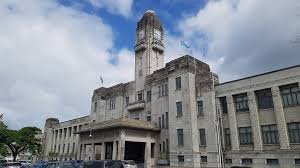
Images used from Wikimedia Commons: Fiji Parliament House3.jpg (Parliament House, Suva) and Renwick Road, Suva, Fiji.jpg.