Table of Contents
Fiji General Election — 1966: The Last Colonial Contest
The 1966 general election was Fiji’s last under colonial rule and the first under the new ministerial system. It marked the arrival of party politics in its modern form, the emergence of the Alliance Party as the dominant force, and the rise of the Federation Party as the organised voice of Indo-Fijian aspirations. The outcome laid the foundation for the independence settlement of 1970 and set Fiji’s political trajectory for decades to come.
Context: Colonial Fiji on the Road to Independence
By the mid-1960s, Fiji was under growing pressure to decolonise. Britain had already moved swiftly in other colonies, and the winds of change were blowing across the Pacific.
Yet Fiji presented unique challenges. Its population was divided almost evenly between indigenous Fijians and Indo-Fijians, alongside a smaller but politically active General Elector community of Europeans, part-Europeans, Chinese, and others. Crafting a constitutional system that could balance these interests was at the heart of Britain’s late-colonial project in Fiji.
The 1965 London Constitutional Conference introduced a new ministerial system that gave elected members real portfolios for the first time. But it also entrenched communal representation: 36 seats in the Legislative Council were divided among communal rolls —14 for Fijians, 12 for Indo-Fijians, 10 for General Electors — plus two nominated by the colonial Governor.
The stage was set for the first truly party-based election in Fiji’s history.
Out of this context emerged two major parties. The Alliance Party, led by Ratu Sir Kamisese Mara, was a multi-ethnic coalition dominated by indigenous chiefs and supported strongly by the General Electors. It presented itself as the party of order, tradition, and gradual progress toward self-government. The Federation Party, founded in 1963 by A. D. Patel, was the first organised political vehicle for Indo-Fijians, advocating equality, economic reform, and eventual independence.
The Campaign: Alliance vs. Federation
The 1966 campaign was Fiji’s first taste of modern party politics. The Alliance, formed only a year earlier, quickly consolidated support from indigenous chiefs through the Fijian Association,
Europeans through the National Congress of Fiji, and minorities through the General Electors’ Association. Mara’s charisma and chiefly status lent the party immense authority, especially among rural Fijians.
The Federation Party, meanwhile, mobilised Indo-Fijians in the cane belt districts. Patel, a veteran lawyer and nationalist, demanded common roll elections (one person, one vote) instead of the communal system. The party campaigned on social justice, fair land leases, and the promise of true equality in an independent Fiji. Its rallies in Ba, Lautoka, and Labasa drew thousands, particularly among cane farmers frustrated by short-term leases and colonial restrictions.
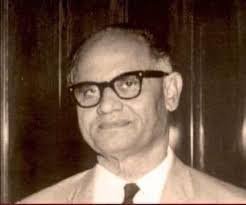
Federation Party, campaigned
for equality and common roll. (Wikimedia Commons)
The campaign exposed Fiji’s deep communal divides. Indo-Fijians overwhelmingly supported the Federation Party, while most indigenous Fijians and General Electors gravitated toward the Alliance. Newspapers reflected the polarisation: the English-language Fiji Times praised Mara’s moderation, while Indian-language papers celebrated Patel as the champion of equality.
Results: Alliance Landslide
The results delivered a decisive victory for the Alliance Party. Out of 36 elected seats, the Alliance captured 23, compared to the Federation Party’s 9. The remaining 4 went to independents or smaller groups. With two additional nominated members, the Alliance commanded a working majority and quickly consolidated control of the ministerial system.
The communal system ensured the Alliance’s dominance. It swept the indigenous Fijian communal seats and all General Elector seats, while the Federation Party won nearly all Indo-Fijian seats.
This ethnic polarisation would become the hallmark of Fijian elections for the next two decades.
Mara was appointed Chief Minister — effectively the head of government —and began leading Fiji through the final stages of decolonisation. Patel, as leader of the Federation Party, became Leader of the Opposition, making Fiji’s new parliamentary system more closely resemble Westminster.
| Party | Leader | Seats Won | Notes |
|---|---|---|---|
| Alliance Party | Ratu Sir Kamisese Mara | 23 | Dominated Fijian and General communal seats |
| Federation Party | A. D. Patel | 9 | Strong in Indo-Fijian seats; pushed common roll |
| Others / Independents | — | 4 | Minor candidates, no national impact |
Aftermath: Toward Independence
The 1966 election inaugurated Fiji’s ministerial system, with Mara as Chief Minister overseeing portfolios. The Alliance’s victory reassured Britain that Fiji could move smoothly toward independence under chiefly leadership. For Mara, it was the beginning of a 25-year dominance of Fijian politics.
The Federation Party, however, laid down a marker. Patel’s calls for common roll and equality could not be ignored. Though outnumbered in Parliament, the Federation’s 9 seats gave Indo-Fijians a unified parliamentary voice for the first time. Patel pressed land reform and constitutional change, though his sudden death in 1969 deprived the party of its founding leader.
The 1966–1970 period became Fiji’s transitional era:Alliance dominance provided stability, but Indo-Fijian discontent remained unresolved. When Fiji became independent in 1970, the communal system was retained almost intact —a testament to the Alliance’s negotiating strength but also a source of future conflict.
Legacy: The Dawn of Party Politics
Historians regard the 1966 election as the dawn of modern party politics in Fiji. It established the Alliance–Federation divide that defined the next two decades, entrenched communal voting patterns, and showed how colonial constitutional design shaped outcomes. It also introduced Fiji’s first experience of a functioning parliamentary opposition, a critical step toward independence.
For Mara, it was the launch of his long premiership. For Patel, it was vindication of years of Indo-Fijian struggle for political rights. For Fiji, it was a rehearsal for the independence election of 1972,
and a reminder that democracy in a divided society was both possible and perilous.
“1966 was not just an election; it was the moment Fiji’s political future came into focus.
Alliance rule, Federation opposition, and communal division — the stage was set.” — Political analyst, University of the South Pacific
Elected Members of Parliament — 1966 (36 seats + 2 nominated)
Source: “List of members of the Parliament of Fiji (1966–1972)” — Legislative Council roll.
Fijian Communal Constituencies (14 seats)
| # | Constituency | Member | Party |
|---|---|---|---|
| 1 | Ba–Nadi | Ratu Napolioni Dawai | Alliance |
| 2 | Bua–Macuata | Militoni Leweniqila | Alliance |
| 3 | Cakaudrove | Ratu Jone Naisara | Alliance |
| 4 | Kadavu | Tomasi Vakatora | Alliance |
| 5 | Lau | Ratu Sir Kamisese Mara | Alliance |
| 6 | Lomaiviti | Ratu Solomone Momoivalu | Alliance |
| 7 | Nadroga–Navosa | Ratu Osea Gavidi | Alliance |
| 8 | Naitasiri | Livai Nasilivata | Alliance |
| 9 | Ra | Ratu Jone Banuve | Alliance |
| 10 | Rewa | Ratu Sir Penaia Ganilau | Alliance |
| 11 | Serua–Namosi | Ratu Josefa Iloilo | Alliance |
| 12 | Suva Urban (Fijian) | Seci Nawalowalo | Alliance |
| 13 | Tailevu | William Toganivalu | Alliance |
| 14 | Yasawa | Josaia Tavaiqia | Alliance |
Indo-Fijian Communal Constituencies (12 seats)
| # | Constituency | Member | Party |
|---|---|---|---|
| 15 | Ba | Siddiq Koya | Federation |
| 16 | Ba Rural | Sarvan Singh | Federation |
| 17 | Lautoka | Jai Ram Reddy | Federation |
| 18 | Lautoka Rural | K. C. Ramrakha | Federation |
| 19 | Labasa–Bua | A. D. Patel | Federation |
| 20 | Nadi | H. M. Lodhia | Federation |
| 21 | Nasinu–Vunidawa | Chandra Pal Singh | Federation |
| 22 | Nausori–Levuka | James Madhavan | Federation |
| 23 | Savusavu | Shiva Naidu | Federation |
| 24 | Sigatoka | Harish Sharma | Federation |
| 25 | Suva City (Indian) | Irene Jai Narayan | Federation |
| 26 | Tavua | Ram Sami Goundar | Federation |
General Communal Constituencies (10 seats)
| # | Constituency | Member | Party |
|---|---|---|---|
| 27 | Eastern General | Charles Walker | Alliance |
| 28 | Northern General | Bill Clark | Alliance |
| 29 | Southern General | Charles Stinson | Alliance |
| 30 | Western General | Edward Beddoes | Alliance |
| 31 | Suva Urban General | James Ah Koy | Alliance |
| 32 | Levuka General | Bruce Ragg | Alliance |
| 33 | Lautoka General | Ronald Ragg | Alliance |
| 34 | Labasa General | Peter Sloan | Alliance |
| 35 | Ba General | John Falvey | Alliance |
| 36 | Sigatoka General | Henry Ragg | Alliance |
Nominated Members (2)
| # | Name | Background |
|---|---|---|
| 37 | Sir John Falvey | Attorney-General, nominated by Governor |
| 38 | Ratu Sir George Cakobau | Senior chief, nominated by Governor |
Abbrev: Alliance = Alliance Party; Federation = Federation Party.