Table of Contents
Fiji Legislative Council Election — 1963: A Breakthrough for Indo-Fijians
The 1963 Legislative Council election was a watershed moment in Fiji’s history. It was the last election fully under colonial rule, the first in which all three major ethnic groups elected communal representatives, and the first in which Indo-Fijians secured genuine voting rights. It marked the beginning of modern Fiji’s political awakening, laying the foundations for party politics and independence.
Context: Colonial Fiji on the Brink of Change
By 1963, Fiji had been a British colony for more than eight decades. Its population was divided almost evenly between indigenous Fijians and Indo-Fijians, with a smaller but powerful General Elector community of Europeans, part-Europeans, and Chinese.
For decades, political representation had been heavily restricted: most members of the Legislative Council were appointed by the Governor, and the few elected seats were limited to the European roll. Pressure for reform came from many directions. Internationally, the winds of decolonisation were sweeping across Asia and Africa. Domestically, Indo-Fijians, who formed nearly half of Fiji’s population, demanded political rights equal to their demographic weight.
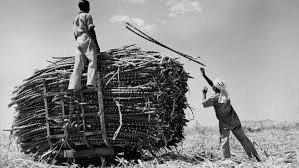
The sugar industry, dominated by Indo-Fijian farmers, became the focal point of this struggle.
Figures like A. D. Patel and Siddiq Koya argued that it was no longer sustainable for Indo-Fijians to be denied meaningful representation.
Responding to this pressure, the colonial government introduced reforms for the 1963 election.
For the first time, communal franchise was extended across the board: 12 seats for Fijians, 12 for Indo-Fijians, and 10 for General Electors were created in the Legislative Council. Although the Governor still nominated additional members, the balance had shifted decisively toward elected representation.
Why 1963 Was a Breakthrough for Indo-Fijians
- First direct franchise: Indo-Fijians could finally elect representatives of their own choice to the Legislative Council.
- Recognition of numbers: With 12 communal seats, Indo-Fijians now had representation proportional to their demographic weight.
- Platform for leadership: Leaders like A. D. Patel and Siddiq Koya used this election to consolidate Indo-Fijian political power.
- Birth of organised politics: The Federation movement grew out of this election, later formalised as the Federation Party.
- Step toward independence: The Indo-Fijian breakthrough forced Britain and Fijian chiefs to accept a more inclusive political system.
The Campaign: Cautious but Historic
Unlike later contests, the 1963 election did not feature fully developed political parties.
Instead, candidates ran as individuals, though clear blocs emerged. Among Fijians, chiefly leaders aligned closely with the colonial government and the Fijian Affairs Board, emphasising stability and tradition.
Among Indo-Fijians, candidates rallied under the leadership of Patel and Koya, advocating equality and reform. The General Electors remained largely conservative, preferring candidates who would protect European economic dominance.
Campaigning was cautious, as communal divisions were already sensitive. In the cane belts of Ba, Lautoka, and Labasa, Indo-Fijian candidates spoke directly about land lease insecurity, poverty, and discrimination.
In Suva and the eastern islands, Fijian chiefs emphasised the need to preserve communal ownership of land and resist calls for a common electoral roll. The colonial administration, while presenting itself as neutral, quietly supported the Fijian and General Elector blocs to ensure continued stability.
Results: Representation, but Along Ethnic Lines
The election results confirmed the communal divide. The Fijian seats were dominated by chiefs allied to the colonial establishment. The Indo-Fijian seats went overwhelmingly to candidates associated with Patel’s reformist bloc, while the General Elector seats remained firmly in conservative hands.
Although there were no official parties yet, the voting patterns revealed a political structure that would harden over the next decade: Alliance dominance among Fijians and General Electors, and Indo-Fijian support coalescing around the Federation movement.
Out of 34 elected seats (12 Fijian, 12 Indo-Fijian, 10 General), the colonial government ensured stability by appointing nominated members and retaining control over key portfolios. Still, the significance of the Indo-Fijian victory could not be overstated: for the first time, Indo-Fijians had an organised parliamentary voice.
| Group | Seats Won | Notes |
|---|---|---|
| Fijians | 12 | Dominated by chiefly establishment |
| Indo-Fijians | 12 | Leaders consolidated around Patel’s Federation movement |
| General Electors | 10 | Remained conservative, loyal to colonial system |
Aftermath: From Federation Movement to Party Politics
In the wake of the 1963 election, the Indo-Fijian bloc began to institutionalise itself. Patel and Koya formally established the Federation Party that same year, providing a permanent vehicle for Indo-Fijian political aspirations. Its platform of common roll and equal rights would dominate Indo-Fijian politics until the formation of the Labour Party in the 1980s.
For the Fijian bloc, the election reaffirmed chiefly authority. The Great Council of Chiefs and the Fijian Affairs Board remained powerful, and indigenous leaders were content to work with the colonial government.
For General Electors, the results ensured their continued influence, as they controlled key economic sectors and retained close ties to the colonial administration.
The election also set the stage for the 1965 London Constitutional Conference, where Patel and Mara would clash over the future shape of Fiji. The Indo-Fijian breakthrough in 1963 gave Patel the legitimacy to demand reforms, while Mara used the Fijian and General Elector mandate to defend communal representation.
Legacy: The Beginning of Real Politics
The 1963 Legislative Council election is remembered as the beginning of real politics in Fiji. It was the first time the colony experienced competitive elections across all communities, and the first time Indo-Fijians could vote in meaningful numbers.
Though still confined to communal rolls, the franchise empowered a generation of leaders who would soon dominate Fiji’s path to independence. For Indo-Fijians, it was a breakthrough — proof that they could mobilise, win seats, and demand equality.
For indigenous Fijians, it reinforced the centrality of chiefly leadership. For General Electors, it preserved their influence in a rapidly changing society. And for Fiji as a whole, it was the prelude to independence.
“1963 was the year Fiji’s politics came alive.
For the first time, every community had a voice — and the contest between them would define the nation’s future.” — Political historian, USP
Elected Members of the Legislative Council — 1963 (34 seats + nominated)
Source: “List of members of the Legislative Council of Fiji (1963–1966)” — colonial records.
Fijian Communal Constituencies (12 seats)
| # | Constituency | Member |
|---|---|---|
| 1 | Ba–Nadi | Ratu Napolioni Dawai |
| 2 | Bua–Macuata | Ratu Edward Cakobau |
| 3 | Cakaudrove | Ratu Jone Naisara |
| 4 | Kadavu | Ratu Tomasi Vakatora |
| 5 | Lau | Ratu Sir Kamisese Mara |
| 6 | Lomaiviti | Ratu Solomone Momoivalu |
| 7 | Nadroga–Navosa | Ratu Osea Gavidi |
| 8 | Naitasiri | Livai Nasilivata |
| 9 | Ra | Ratu Jone Banuve |
| 10 | Rewa | Ratu Penaia Ganilau |
| 11 | Serua–Namosi | Ratu Josefa Iloilo |
| 12 | Suva (Fijian) | Seci Nawalowalo |
Indo-Fijian Communal Constituencies (12 seats)
| # | Constituency | Member |
|---|---|---|
| 13 | Ba | Siddiq Koya |
| 14 | Ba Rural | Sarvan Singh |
| 15 | Lautoka | Jai Ram Reddy |
| 16 | Lautoka Rural | K. C. Ramrakha |
| 17 | Labasa–Bua | A. D. Patel |
| 18 | Nadi | H. M. Lodhia |
| 19 | Nasinu–Vunidawa | Chandra Pal Singh |
| 20 | Nausori–Levuka | James Madhavan |
| 21 | Savusavu | Shiva Naidu |
| 22 | Sigatoka | Harish Sharma |
| 23 | Suva (Indian) | Irene Jai Narayan |
| 24 | Tavua | Ram Sami Goundar |
General Communal Constituencies (10 seats)
| # | Constituency | Member |
|---|---|---|
| 25 | Eastern General | Charles Walker |
| 26 | Northern General | Bill Clark |
| 27 | Southern General | Charles Stinson |
| 28 | Western General | Edward Beddoes |
| 29 | Suva Urban General | James Ah Koy |
| 30 | Levuka General | Bruce Ragg |
| 31 | Lautoka General | Ronald Ragg |
| 32 | Labasa General | Peter Sloan |
| 33 | Ba General | John Falvey |
| 34 | Sigatoka General | Henry Ragg |
Nominated Members (by Governor)
| # | Name | Community / Background |
|---|---|---|
| 35 | Sir John Falvey | Attorney-General, European |
| 36 | Ratu Sir George Cakobau | Senior Fijian chief, Vunivalu of Bau |
| 37 | Other officials (colonial nominees) | Appointed by Governor |
Breakdown: 12 Fijian communal, 12 Indo-Fijian communal, 10 General communal, plus nominated members.
This was the first election in which Indo-Fijians directly elected representatives, a landmark in Fiji’s political development.