

Table of Contents
Fiji Legislative Council Election — 1959: The Last of the Colonial Style Polls
The 1959 election to Fiji’s Legislative Council was unlike any modern democratic contest.
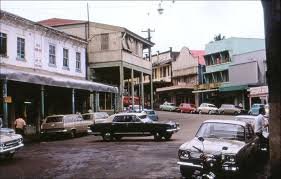
Conducted under a colonial constitution with a restricted franchise, it resembled more of an elite selection than a people’s vote. Yet even in its limited form, the 1959 poll revealed the deepening aspirations of Indo-Fijians for equality, the cautious role of indigenous chiefs in the colonial order,
and the determination of European settlers to protect their privilege. It was the last of Fiji’s “colonial-style” elections before the breakthrough of 1963.
Context: A Restricted Colonial Franchise
By 1959, Fiji had been a British colony for 85 years. Its Legislative Council was part-elected, part-nominated, and firmly under the authority of the colonial Governor. The franchise was heavily restricted: only a small minority of citizens could vote, determined by property ownership, income, or literacy tests. Women were largely excluded, as were the vast majority of working-class Indo-Fijians and indigenous Fijians.
Representation was strictly communal. Europeans (classified as “General Electors”) had their own roll, Indo-Fijians theirs, and indigenous Fijians were largely represented through chiefly nominees.
The system was designed to preserve European economic dominance while giving the appearance of progress toward representative government. Despite this, pressure for change was growing.
Across the British Empire, decolonisation was underway.
In Fiji, Indo-Fijians — who made up nearly half of the colony’s population — were increasingly restless about their limited rights. Leaders such as A. D. Patel and Siddiq Koya pushed for “common roll” — one person, one vote — as the only fair system for a multi-ethnic colony.
Colonial Election Style: Why 1959 Was Different
- Restricted franchise: Only property-owning, literate males could vote; turnout was minuscule compared to Fiji’s population.
- No mass campaigns: Candidates relied on small public meetings, newspaper ads, and personal networks rather than rallies.
- Chiefly authority: Fijian representatives were mainly appointed or endorsed by the colonial administration and chiefs.
- Communal rolls: Europeans, Fijians, and Indo-Fijians all voted (or were represented) separately, reinforcing ethnic boundaries.
- Colonial oversight: The Governor retained veto powers, ensuring that the election had limited real impact on governance.
The Campaign: Quiet, Elite, and Communal
Campaigning in 1959 bore little resemblance to the noisy rallies of later years. There were no political parties in the modern sense, only loose associations of candidates. The European seats saw spirited contests, with businessmen and planters competing to safeguard economic privilege.
The Indo-Fijian seats, by contrast, became a platform for Patel and Koya to advance the demand for equality, even within the confines of a limited electorate.
Indo-Fijian campaign style was shaped by the cane belt. Meetings were often held in temples, community halls, and cane farmers’ associations, where speakers addressed land lease insecurity and the injustice of restricted voting rights. Patel in particular argued that Fiji could not continue to deny Indo-Fijians — who contributed so much to the economy — an equal political voice.
Fijian representation remained dominated by the chiefly establishment. The Great Council of Chiefs endorsed candidates, and the colonial Governor approved nominees. Campaigning was minimal; for most Fijians, the election was a distant event in Suva, far removed from village life.
Results: Predictable but Symbolic
The results of the 1959 election were predictable. Europeans retained strong representation, controlling both elected and appointed seats. Fijian seats remained in chiefly hands, with colonial backing.
Indo-Fijian leaders secured their allotted seats, but the limited electorate meant their mandate was narrow. Out of 37 members of the Legislative Council, only 19 were elected (9 General, 9 Indo-Fijian, 1 Fijian), while the rest were official or nominated.
This ensured that colonial authorities maintained control regardless of electoral outcomes.
Still, the Indo-Fijian bloc used its platform to demand change, and the debates of 1959 foreshadowed the more democratic reforms of 1963.
| Group | Elected Seats | Notes |
|---|---|---|
| General Electors (Europeans) | 9 | Controlled by businessmen and planters |
| Indo-Fijians | 9 | Represented by Patel, Koya, and allies |
| Fijians | 1 | Chiefly nominee, colonial-approved |
| Nominated / Official | 18 | Colonial officers and appointees |
Aftermath: Towards Reform
Though the 1959 Legislative Council remained firmly colonial, the election underscored the unsustainability of the restricted franchise.
Indo-Fijian leaders emerged more vocal than ever, demanding reform at the London Constitutional Conference. The election also demonstrated that communal divisions were now politically entrenched — Europeans, Fijians, and Indo-Fijians all voted or were represented separately.
The colonial administration recognised that change was inevitable. Within four years, the 1963 election would extend communal franchise to all adult males, dramatically expanding participation.
For many historians, 1959 was the “last gasp” of elite colonial rule, a symbolic marker on the road to real democracy.
Legacy: The End of the Colonial Style Election
The 1959 election is remembered as the last of Fiji’s colonial-style contests. It was an election without mass participation, conducted in drawing rooms and planters’ clubs rather than public rallies.
But it marked the point at which Indo-Fijian leaders fully committed to constitutional struggle.
Patel’s advocacy for common roll gained new legitimacy, and by 1963 the political system could no longer deny Indo-Fijians the vote.
“1959 was the twilight of colonial rule.
Its restricted franchise and elite contests could not withstand the pressure of Indo-Fijian demands for equality
and the global tide of decolonisation.” — Political historian, USP
Legislative Council Membership — 1959 Election (37 seats)
Source: “List of members of the Legislative Council of Fiji (1959–1963)” — official roll.
General Electors (Europeans & Others) — 9 elected
| # | Constituency | Member |
|---|---|---|
| 1 | Eastern | Charles Walker |
| 2 | Northern | Bill Clark |
| 3 | Southern | Charles Stinson |
| 4 | Western | Edward Beddoes |
| 5 | Suva Urban | James Ah Koy |
| 6 | Levuka | Bruce Ragg |
| 7 | Lautoka | Ronald Ragg |
| 8 | Labasa | Peter Sloan |
| 9 | Ba | John Falvey |
Indo-Fijians — 9 elected
| # | Constituency | Member |
|---|---|---|
| 10 | Ba | Siddiq Koya |
| 11 | Ba Rural | Sarvan Singh |
| 12 | Lautoka | Jai Ram Reddy |
| 13 | Lautoka Rural | K. C. Ramrakha |
| 14 | Labasa–Bua | A. D. Patel |
| 15 | Nadi | H. M. Lodhia |
| 16 | Nasinu–Vunidawa | Chandra Pal Singh |
| 17 | Nausori–Levuka | James Madhavan |
| 18 | Sigatoka | Harish Sharma |
Fijians — 1 elected (chiefly)
| # | Constituency | Member |
|---|---|---|
| 19 | Eastern Fijian seat | Ratu Penaia Ganilau |
Nominated & Official Members — 18 appointed by Governor
| # | Name | Position / Background |
|---|---|---|
| 20 | Sir Kenneth Maddocks | Governor & Council President |
| 21 | Sir John Falvey | Attorney-General |
| 22 | Ratu Sir George Cakobau | Paramount Fijian chief |
| 23 | Colonial Secretary | British official |
| 24 | Financial Secretary | British official |
| 25 | Director of Agriculture | British official |
| 26 | Director of Medical Services | British official |
| 27 | Other European appointees (x4) | Settler nominees |
| 31 | Other Fijian appointees (x4) | Chiefly nominees |
| 35 | Other Indo-Fijian appointees (x2) | Community nominees |
Totals: 19 elected (9 General, 9 Indo-Fijian, 1 Fijian) + 18 nominated/official.
This balance ensured colonial authorities and allied chiefs/settlers retained control despite electoral contests.