
Table of Contents
1970 Independence: A Nation Born in Compromise
On 10 October 1970, Fiji raised its new flag at Albert Park, Suva, and became an independent nation. The date—chosen to echo the 1874 Deed of Cession—marked the end of nearly a century of British colonial rule. But independence came not with a clean break or revolutionary triumph, but with compromise. For Indo-Fijians, who had fought for equality and common roll, independence was bittersweet: it delivered self-government but entrenched a system of communal politics that left them unequal in their own homeland.
The Road to Independence
By the late 1960s, decolonisation was sweeping the globe. Britain, exhausted and reshaping its empire, was eager to grant independence to Fiji. The colony’s population was almost evenly split: indigenous Fijians held chiefly authority and land, while Indo-Fijians dominated the sugar economy and the professions. The challenge was forging a constitution that balanced these interests without igniting ethnic conflict.
The 1965 London Conference had entrenched communal seats, disappointing Indo-Fijians. In 1969, negotiations resumed between the colonial office, the Alliance Party led by Ratu Sir Kamisese Mara, and the National Federation Party led by Siddiq Koya. The talks produced the 1970 Constitution, which became the foundation of independence.
The Constitutional Compromise
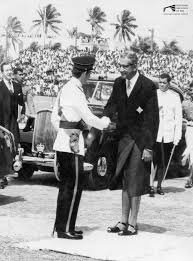
The 1970 Constitution was hailed as a model of balance—but in reality, it reflected deep compromise. Parliament was structured around communal representation: seats were allocated by race (indigenous Fijian, Indo-Fijian, and General Electors), with some cross-voting seats to encourage multi-ethnic appeal. The Senate gave significant power to the Great Council of Chiefs, cementing chiefly authority.
Indo-Fijians, represented by Koya and the NFP, accepted the arrangement reluctantly. They had abandoned Patel’s dream of common roll, calculating that independence itself was worth the price. But many in the Indo-Fijian community saw it as a betrayal, locking them into permanent second-class citizenship.
Independence Day
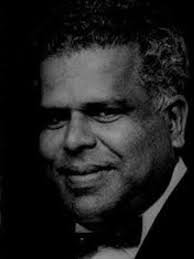
On 10 October 1970, Fiji became independent within the Commonwealth. Prince Charles represented Queen Elizabeth II at the ceremony in Suva. Ratu Mara became the first Prime Minister, and Fiji joined the United Nations soon after. Across the Pacific, Fiji was celebrated as a model of peaceful transition—unlike the violent struggles in other colonies.
But beneath the pageantry, tensions simmered. Many Indo-Fijians felt pride at the flag and anthem but feared exclusion. They had fought for a Fiji that was truly multiracial; instead, they inherited a state where ethnicity was embedded into every vote, every seat, and every institution.
Early Years of Independence
The first years of independence were dominated by Mara’s Alliance Party, which commanded broad support from indigenous Fijians and minorities. The NFP remained the voice of Indo-Fijians, but divisions weakened it. Economic growth brought some stability, yet land leases and communal politics sowed seeds of future conflict. For Indo-Fijians, the fundamental question remained unanswered: were they full citizens of Fiji, or guests tolerated in a chiefly state?
The Indo-Fijian Perspective
For Indo-Fijians, independence was a paradox. They were now part of a free Fiji, but their equality was not guaranteed. Many had hoped that Britain, at the last moment, would grant common roll and full rights. Instead, they found themselves bound by a constitution that enshrined communal divisions. The struggle that began in the cane fields in 1920 was not over; it had simply entered a new phase.
Legacy of 1970 Independence
Independence is remembered with pride across Fiji, but for Indo-Fijians, it carries an edge of disappointment. It was a day of national birth but also of compromise that shaped decades of politics. The communal system laid down in 1970 would fuel the crises of 1977, the coups of 1987, and the constitutional struggles of the 1990s. Patel’s vision of equality had been set aside, and Fiji entered nationhood divided.
Yet 1970 also marked the beginning of a long journey: Indo-Fijians were no longer colonial subjects but citizens of Fiji. Their fight for recognition would now play out not in London or Canberra, but in Suva, Lautoka, and Labasa. Independence gave them the right to belong—and the duty to keep fighting for equality.