
Table of Contents
1987 Coups: The Day Democracy Died
On 14 May 1987—ironically the anniversary of the arrival of the first Girmitiyas—Fiji’s young democracy was shattered. Armed soldiers, led by Lieutenant Colonel Sitiveni Rabuka, stormed Parliament and deposed the newly elected government of Dr Timoci Bavadra. It was Fiji’s first military coup. For Indo-Fijians, who had overwhelmingly backed Bavadra’s multiracial coalition, it was a day of betrayal and fear. Overnight, their democratic voice was silenced, and their future in Fiji thrown into uncertainty.
The Road to May 1987
Fiji’s 1970 independence settlement had rested on communal politics dominated by the Alliance Party of Ratu Mara. But by the mid-1980s, dissatisfaction was rising. The sugar industry was in turmoil, unemployment was growing, and young Indo-Fijians were restless. In 1985, trade unionist Dr Timoci Bavadra, an indigenous Fijian doctor from Nadi, formed the Fiji Labour Party (FLP), which quickly allied with the Indo-Fijian–based National Federation Party (NFP).
In the April 1987 elections, this coalition achieved the unthinkable: they defeated the Alliance Party. For the first time, Fiji had a government led by a commoner Fijian, backed by Indo-Fijians and progressive indigenous allies. In his Cabinet, Mahendra Chaudhry, a former union leader, became Minister of Finance—the highest post ever held by an Indo-Fijian at that time.
14 May 1987: The First Coup
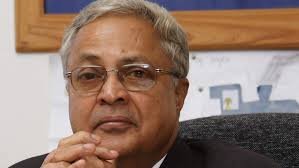
Within weeks of the election, resentment brewed among sections of the indigenous chiefly elite and military. On 14 May, as Bavadra’s government met in Parliament, Lieutenant Colonel Sitiveni Rabuka, a little-known officer, led armed soldiers into the chamber. MPs were held at gunpoint and forced out. Bavadra, Chaudhry, and their colleagues were arrested. Fiji’s first democratic transfer of power had been crushed.
Rabuka justified his actions as defending indigenous Fijian rights, claiming the coalition government threatened their paramountcy. Many indigenous Fijians cheered him; Indo-Fijians watched in shock and terror.
September 1987: The Second Coup
After negotiations and attempts at compromise, a caretaker arrangement briefly restored civilian government. But Rabuka struck again on 25 September 1987, launching a second coup. This time, he declared Fiji a republic, severed ties with the Queen, and entrenched military power. The 1970 Constitution was abrogated. Indo-Fijians, once again, were pushed to the margins of the nation they had helped build.
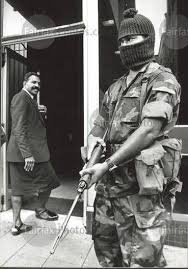
The coups institutionalised the idea that democracy could be overturned if it delivered power to Indo-Fijians. For many, it was the ultimate betrayal of independence promises.
Consequences for Indo-Fijians
The impact on Indo-Fijians was devastating:
- Mass Migration: Tens of thousands left Fiji, many permanently. Professionals, teachers, and business families sought new lives in Australia, New Zealand, Canada, and the United States.
- Violence and Intimidation: Indo-Fijian homes and businesses were attacked in the aftermath of the coups. Fear stalked communities.
- Loss of Political Rights: A new 1990 Constitution entrenched indigenous political dominance, drastically reducing Indo-Fijian representation.
- Economic Exclusion: Many Indo-Fijians lost access to land leases and opportunities, reinforcing marginalisation.
For a community that had fought for equality since Girmit, the coups were a brutal confirmation that their place in Fiji was still conditional.
Political Significance
The 1987 coups were more than a domestic crisis. They marked the beginning of Fiji’s cycle of coups, where the military became arbiter of power. They destroyed international confidence, leading to sanctions and Fiji’s suspension from the Commonwealth. Most of all, they redefined Indo-Fijian identity: no longer just a struggle for equality, but now a struggle for survival.
Out of this trauma, new leaders would rise—most notably Mahendra Chaudhry, who would later become Fiji’s first Indo-Fijian Prime Minister in 1999, only to be overthrown again in 2000.
Legacy of 1987
The coups of 1987 left scars that endure to this day. They normalised military intervention, fractured Fiji’s social fabric, and drove away a generation of Indo-Fijians. They also deepened divisions between communities, undermining trust in democracy itself.
For Indo-Fijians, 14 May 1987 is remembered with pain. The date that marked the arrival of their ancestors on the Leonidas in 1879 became, a century later, the day they were told they did not truly belong. It was the day democracy died in Fiji—and the struggle for liberty began anew.