
Table of Contents
1965 London Constitutional Conference: Equality Denied
In July 1965, Fiji’s leaders gathered in London to debate the colony’s constitutional future. It was the first major step toward independence. On one side stood A.D. Patel and the Indo-Fijian delegation, demanding common roll—a single, non-racial voting system. On the other side, Ratu Sir Kamisese Mara and the indigenous chiefly bloc, supported by Britain, insisted on maintaining communal seats. The clash in London was more than a debate about franchise; it was a defining struggle over Fiji’s identity, democracy, and the place of Indo-Fijians in the nation.
The Road to London
By the 1960s, Fiji was at a crossroads. The Indo-Fijian population had grown to nearly half the colony, dominating cane farming, education, and the professions. Indo-Fijians demanded equal rights, inspired by decolonisation movements worldwide. The National Federation Party (NFP), led by A.D. Patel, became their voice. Patel’s central demand was “One Man, One Vote, One Value.”
The indigenous Fijian chiefly elite, however, feared being outvoted in an open franchise. They were supported by European settlers, who dreaded Indo-Fijian political dominance. Britain, anxious to preserve stability, convened the London conference to hammer out a compromise.
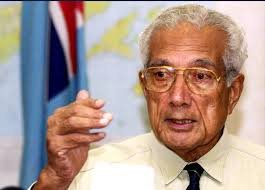
Patel vs Mara
The conference in Marlborough House, London, saw fiery exchanges. Patel argued that communal rolls entrenched racial division and betrayed democratic principles. “If Fiji is to become a modern nation,” he declared, “it must be built on equality, not race.” His vision was of a multi-ethnic Fiji, united by a common franchise.
Mara countered that Fiji’s unique circumstances required protection of indigenous rights. He warned that Indo-Fijians, with their numbers and organisation, would dominate politics under common roll. Britain sided with Mara. The colonial secretary ruled that Fiji would retain a communal seat system, with some cross-voting seats as compromise.
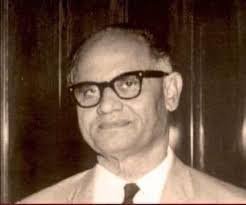
The outcome was devastating for Indo-Fijians. Patel returned from London disillusioned, knowing that Britain had chosen stability over equality. Communalism had been entrenched at the very moment when Fiji was preparing for independence.
The Indo-Fijian Response
The Indo-Fijian community reacted with anger and despair. Farmers, unionists, and students felt betrayed. For them, common roll was not a technical question of electoral systems—it was a question of dignity. Why, they asked, should a man’s vote depend on his race? Why should Indo-Fijians, born in Fiji, still be treated as outsiders?
The NFP doubled down, launching campaigns and rallies to keep the demand alive. Patel, however, died in 1969 before independence, leaving his deputy Siddiq Koya to carry the torch into the next round of negotiations.
Political Significance of London 1965
The London conference confirmed three realities:
- Britain prioritised stability over justice: Colonial officials feared that full equality would lead to conflict between communities.
- Communal politics was institutionalised: By retaining separate rolls, Britain ensured Fiji would enter independence divided by race.
- Indo-Fijians were left disillusioned: Their hopes for equality were dashed, but their political resolve hardened.
In this sense, 1965 was not just a constitutional conference—it was a rehearsal for the battles of independence, coups, and constitutional reforms that would define Fiji for decades.
Legacy of 1965
The London Constitutional Conference is remembered in Indo-Fijian history as the moment equality was denied. Patel’s demand for common roll would not be realised until 2013
For Indo-Fijians, London 1965 is both tragedy and inspiration—a reminder of what was lost, and of the long struggle to come.