
Table of Contents
1943 Cane Strikes: A.D. Patel and the Politics of Resistance
The 1943 sugar cane strikes in Fiji were among the most turbulent industrial disputes in the colony’s history. They pitted Indo-Fijian farmers against the powerful Colonial Sugar Refining Company (CSR), tested the strength of emerging unions, and thrust A.D. Patel into prominence as a fearless advocate of Indo-Fijian rights. Although the strikes ended in defeat, they reshaped the political landscape—cementing the sugar belt as the heart of Indo-Fijian activism and setting the stage for Fiji’s independence debates.
The Sugar Empire and Indo-Fijian Farmers
By the 1940s, Fiji’s economy revolved almost entirely around sugar. CSR, the Australian-owned giant, controlled mills, transport, and export markets. Indo-Fijians, who had become the backbone of cane farming after the end of indenture, lived under CSR’s dominance. Contracts dictated what they planted, how they delivered cane, and the prices they received. Many felt trapped in a new form of economic servitude.
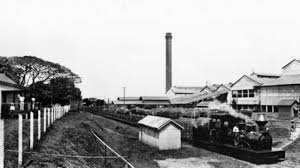
In 1943, anger boiled over. Cane farmers, encouraged by leaders like A.D. Patel and Swami Rudrananda, demanded fairer contracts and higher prices. When CSR refused, thousands of farmers went on strike, paralysing the industry.
A.D. Patel Emerges
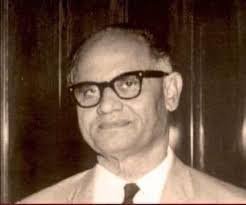
Born in Gujarat, India, and trained as a lawyer, Ambalal Dahyabhai Patel—A.D. Patel—was a new kind of Indo-Fijian leader. Educated, eloquent, and deeply principled, he fused the language of Gandhi’s satyagraha (non-violent resistance) with the immediate concerns of Fiji’s cane farmers. Patel saw the strike not just as an economic dispute but as a battle for dignity.
Patel’s speeches electrified crowds. He urged farmers to remain united, to resist intimidation, and to see themselves as equals to any settler or colonial official. For many Indo-Fijians, he became the first leader who gave voice to their frustrations in terms of justice and human rights, not merely contracts and prices.
Colonial Crackdown
The strikes alarmed the colonial government, especially as Fiji was a strategic outpost during World War II. Authorities feared disruption to sugar exports, which were vital to the war economy. Police were mobilised, and arrests followed. Patel himself was vilified in settler newspapers as a dangerous agitator.
The strike eventually collapsed under pressure, divisions, and exhaustion. CSR refused to concede significant ground, and many farmers returned to work under terms little improved. For some, the strikes seemed a failure. Yet politically, they were transformative: Patel had emerged as the champion of Indo-Fijian rights, and the sugar belt had become the crucible of resistance.
Impact on Indo-Fijian Politics
The 1943 strikes forged a new Indo-Fijian political identity. Farmers realised their strength lay in unity. Unions became more organised: the Kisan Sangh, founded by Ayodhya Prasad, and later the Maha Sangh, led by Patel, became rival but powerful institutions. These unions not only fought CSR but also contested elections to the Legislative Council, bridging the gap between economic struggle and political representation.
Patel’s leadership also introduced the idea of non-violent political resistance in Fiji. Though he admired Gandhi, Patel adapted satyagraha to Fiji’s realities: strikes, petitions, and political organisation rather than outright rebellion. This approach would later shape Indo-Fijian demands at constitutional conferences.
Settler and Chiefly Reactions
For European settlers, the strikes confirmed their fears of an “Indian problem.” Newspapers warned of Indo-Fijian radicalism and painted Patel as a dangerous demagogue. Many chiefs, wary of Indo-Fijian power, sided with colonial authorities. The strikes thus hardened communal lines: Indo-Fijians fighting for justice, settlers defending privilege, and indigenous chiefs navigating their own protected position under colonial policy.
Legacy of the 1943 Strikes
The strikes of 1943 did not win immediate concessions, but they won something deeper: a political awakening. They announced Indo-Fijians as an organised force the colonial government could not ignore. They gave A.D. Patel a platform that would carry him into the 1960s constitutional battles. They cemented the sugar industry as the centre of Indo-Fijian life and struggle.
Most importantly, the strikes linked the Indo-Fijian fight for fair wages to the universal struggle for equality and dignity. They were a rehearsal for independence, decades before the word was seriously considered in Fiji. Though suppressed, the voices of 1943 echoed far beyond the cane fields, into the chambers of London and the birth of a nation.